

Katy Frost
How to identify birds of prey
What bird of prey have you spotted?
‘Birds of prey’ are large, predatory bird species that have hooked bills, sharp talons, strong feet, and keen eyesight and hearing. They tend to feed on small mammals, birds, insects and reptiles. The UK’s birds of prey come in a huge variety of shapes and sizes:
- Hawks and eagles: medium to very large; hooked bills; rounded or broad wings; sharp talons; tend to soar
- Falcons: small to medium-sized; tapered wings and tails; fast and agile; often hover
- Owls: small to large; rounded heads; small, hooked bills; forward-facing eyes; mainly nocturnal
Sparrowhawk
Where: Variety of habitats, including gardens, across the UK.
Description: One of our smallest birds of prey. Males are between a blackbird and a collared dove in size. Females are larger, up to the size of a feral pigeon. Males have blue-grey backs and white underparts with orange barring. Females are brown above, with grey barring underneath. Both have reddish cheeks.
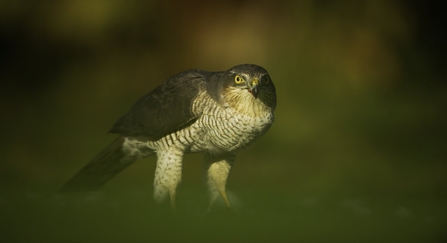
Sparrowhawk by Andrew Parkinson/2020VISION
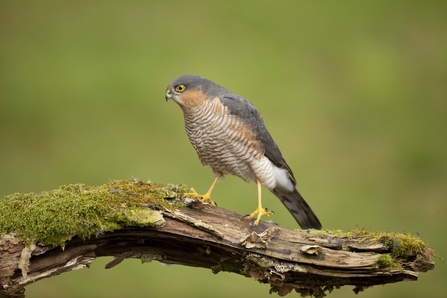
Sparrowhawk stood on a tree branch ©Mark Hamblin/2020VISION
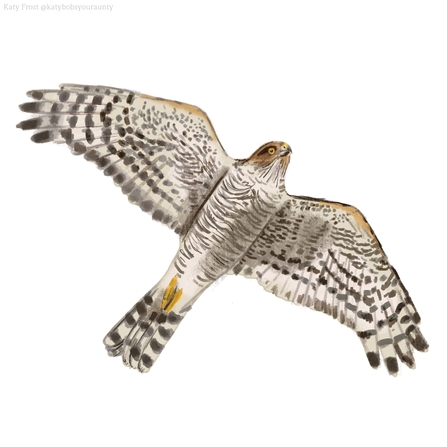
Katy Frost
Buzzard
Where: Grassland, farmland and woodland across the UK.
Description: The most frequently seen bird of prey. Brown plumage which can vary from uniform dark brown to much paler shades. They have broader wings and shorter tails than harriers or red kite.
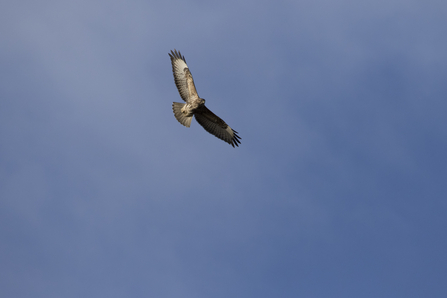
Buzzard © Chris Lawrence
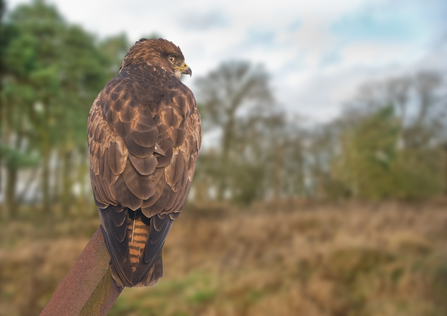
©Bob Coyle
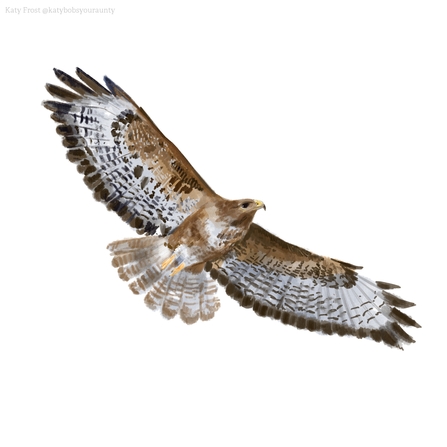
Katy Frost
Red kite
Where: Woodland and farmland found mainly in Wales and southeast England, but red kites are spreading across the country
Description: Large. Reddish-brown plumage, black-tipped wings with white patches underneath, and an unmistakable forked tail.
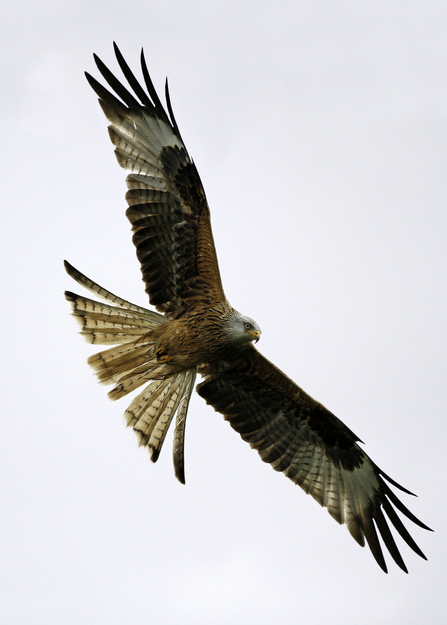
Red kite by Jon Hawkins, Surrey Hills Photography
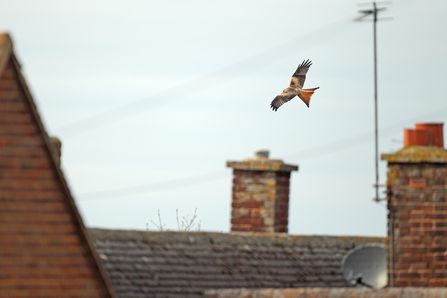
Red kite © Luke Massey/2020VISION

©David Tipling/2020VISION
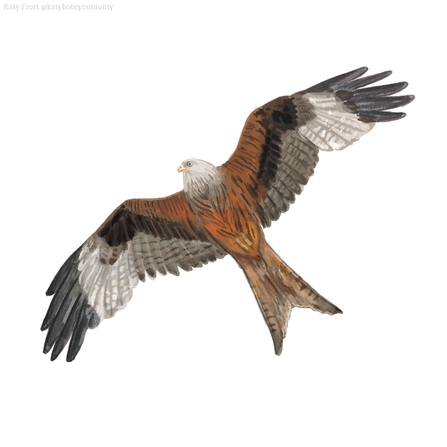
Red kite illustrated by Katy Frost
Kestrel
Where: Grassland, heathland and sometimes towns across the UK.
Description: Small - a little larger than a feral pigeon - with long wings and a long tail. Gingery-brown back and inner wings with darker outer wings. Creamy underside with lines of dark spots. Males have a grey head and grey tail with a dark band at the end. Females have a browner head and tail, with a dark band at the end and thinner bands along its length.
More about the kestrel
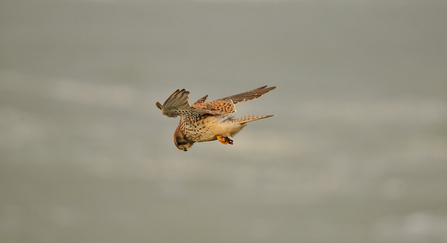
Kestrel by Steve Waterhouse
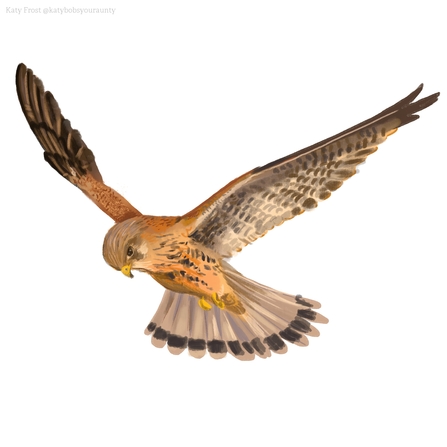
Kestrel by Katy Frost
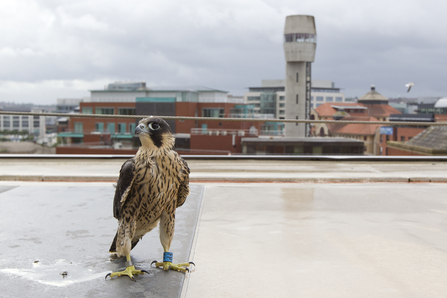
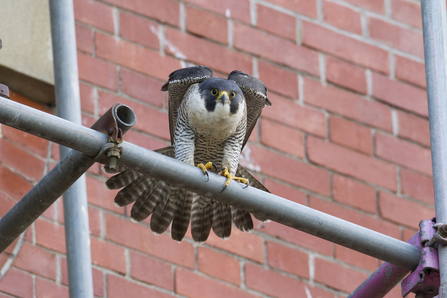
Peregrine falcon
Where: Coastal cliffs and some towns in north and south west England, Wales and Scotland.
Where to see peregrine falcons
Description: Medium - it is our biggest falcon. Slate-grey above and white below, with black bars underneath, a white throat and cheeks, and a black moustache and mask.
More about the peregrine falcon
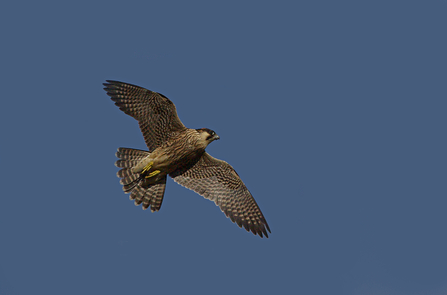
Neil Aldridge
© Bertie Gregory/2020VISION
© Bertie Gregory/2020VISION
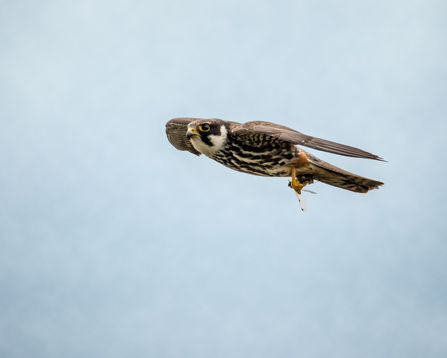
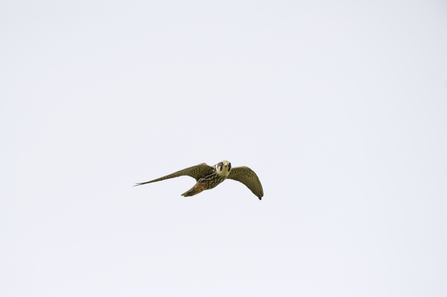
Hobby
Where: Southern and eastern heathlands and wetlands in summer. A very rare visitor to Scotland
Description: Small falcon. Slate-grey plumage, with black streaks on its belly, red 'trousers', a white throat, and a dark moustache and mask. With pointed wings, it can look like an over-sized swift in the air.
More about the hobby
© Andy Morffew
© Terry Whittaker/2020VISION
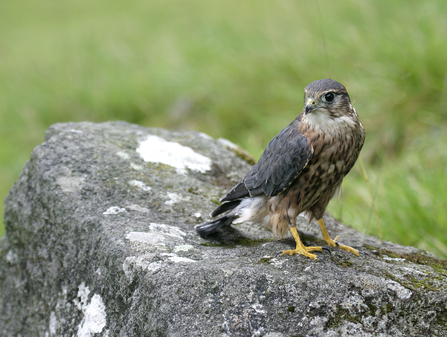
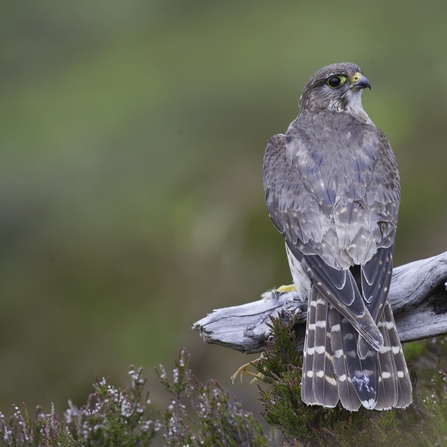
Merlin
Where: Moorlands and coastal marshes in England, Wales and Scotland.
Description: Our smallest falcon. Males are blue-grey above and cream with black streaks underneath. Females are grey-brown with dark streaking. They have blunt tails and compact, broad-based wings which are pointed at the tip.
More about the merlin
©Wildstock
Female Merlin on perch by Rob Jordan/2020VISION
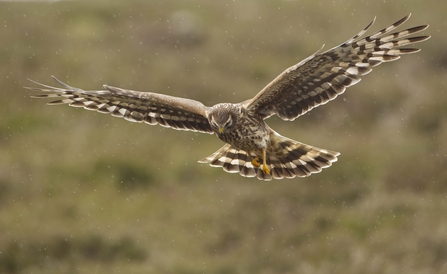
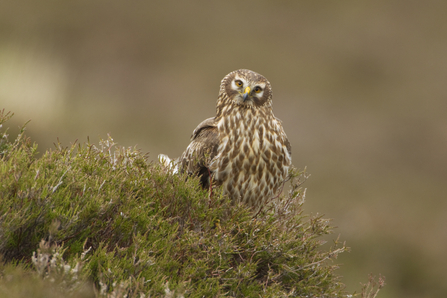
Hen harrier
Where: Breeds on upland moors (rare in England); winters on coasts, heathland and farmland across the UK.
Where to see hen harriers
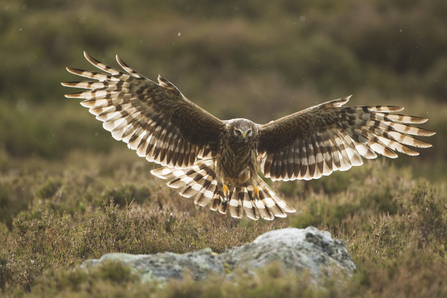
Description: Medium, slim bird. Females are brown above and streaked below, with a white rump and banded tail. Males are blue-grey with a white rump, pale underside and black wingtips.
More about hen harriers
Hen harrier (female) ©Mark Hamblin/2020VISION
© Mark Hamblin/2020VISION
Mark Hamblin/2020VISION
Tawny owl
Where: Woodland, parks and gardens across the UK.
Description: Medium. Mottled brown plumage, a rounded head, large, dark eyes, and a dark ring around its face. They are known for their 'too-wit too-woo' song - the female makes the 'too-wit' sound and the male answers with 'too-woo'.
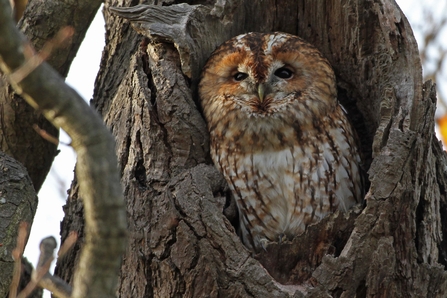
Tawny owl ©Margaret Holland
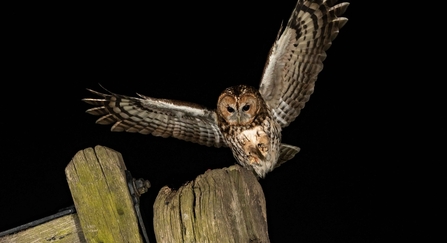
Tawny owl by Thinesh Thirugnanasampanthar
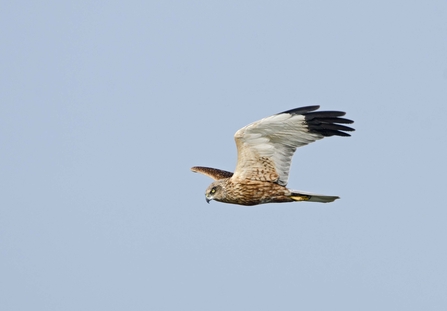
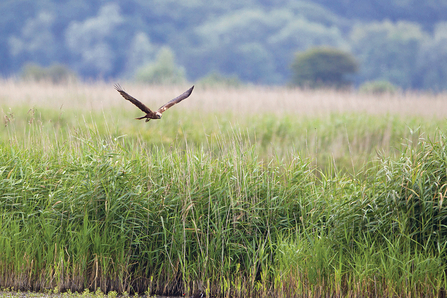
Marsh harrier
Where: Reedbeds in East Anglia, Somerset and the South East
Description: Large - the largest of our harriers. Males are brown above and ginger underneath, with grey, black-tipped wings. Females are chocolate-brown with a golden-yellow crown and throat. They create a distinctive V-shape in the air by holding their wings up.
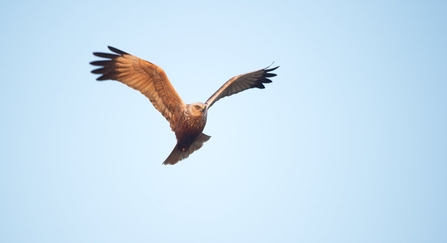
Andrew Parkinson/2020VISION
©David Tipling/2020VISION
(C) Paul Sawyer
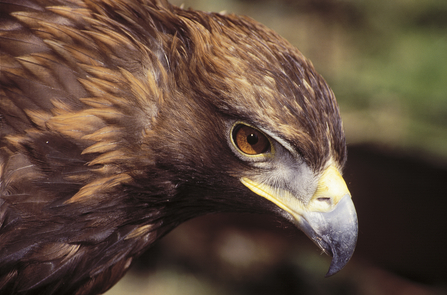
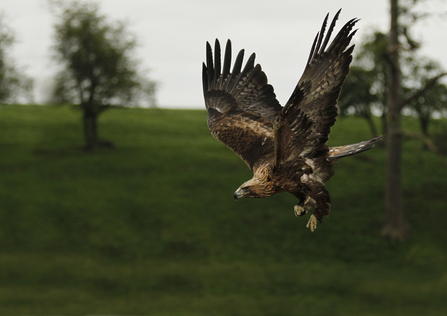
Golden eagle
Where: Upland areas and glens in north and west of Scotland.
Description: Very large, with longer wings and a longer tail than the white-tailed eagle. Mainly dark brown, with a golden head and neck. Younger birds have white patches in their wings and a white base to their tail.
More about the golden eagle
©Wildstock
©Jon Hawkins
Barn owl
Where: Grassland and farmland across the UK.
Where to see barn owls
Description: Small. Mottled silver-grey and buff back, white underside, heart-shaped, white face, and black eyes. Unmistakable!
More about the barn owl
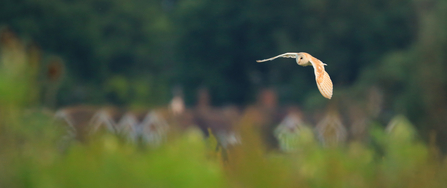
© Jon Hawkins - Surrey Hills Photography
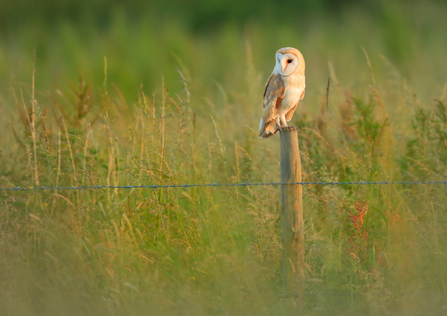
©Jon Hawkins Surrey Hills Photography
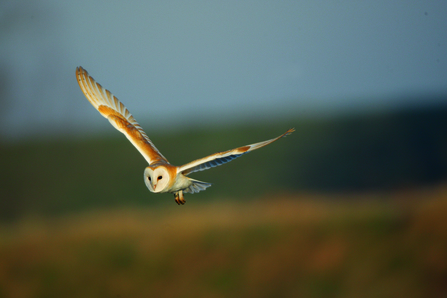
Barn owl at Vine House Farm ©Nicholas Watts
Osprey
Where: Wetlands in Scotland, Northumberland, Cumbria, Wales and the East Midlands in summer
Where to see ospreys
Description: Large. Dark above and white below, with angled wings that show dark patches. White head with dark brown through their eyes. During flight their wings show strong barring.
More about the osprey
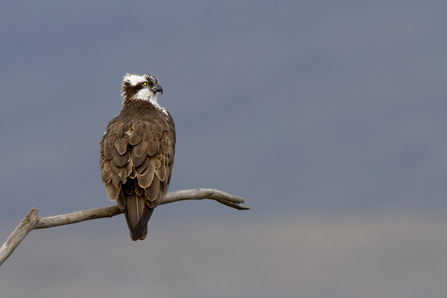
Andy Rouse/2020VISION
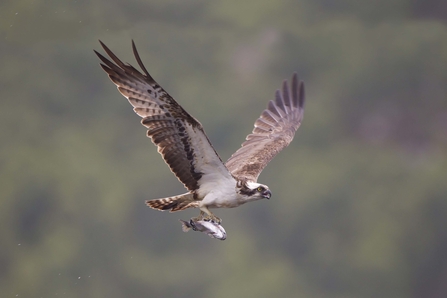
©Peter Cairns/2020
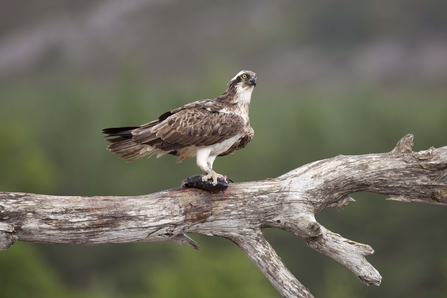
©Peter Cairns/2020VISION
Short-eared owl
Where: Moorlands, saltmarshes and rough grassland. Unusual owl as it prefers to be out in the daytime.
Description: Medium. Mottled yellowy-brown above and pale below, with dark circles around its yellow eyes and short ‘ear tufts’. The similar long-eared owl is darker with orange-red eyes and long ear tufts
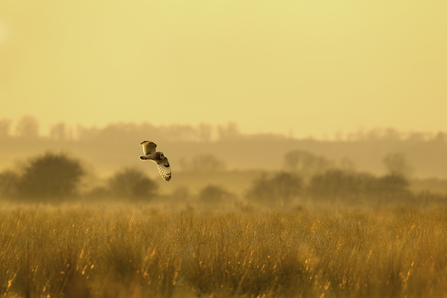
Short-eared owl © Ben Hall/2020VISION
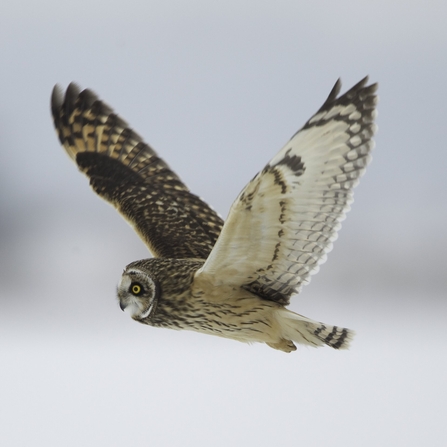
Short-eared owl © Danny Green/2020VISION
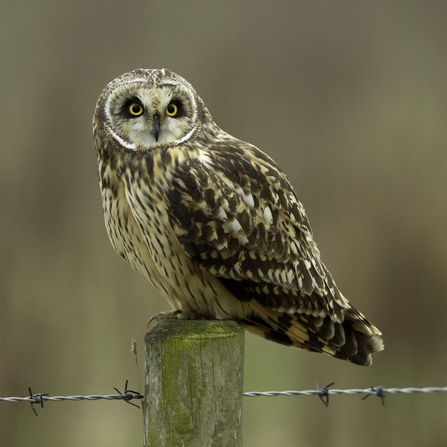
Short-eared owl © Ben Hall/2020VISION
Other rare species that breed in the UK include goshawk, white-tailed eagle and long-eared owl. Explore all the UK's birds of prey on our species explorer.
Are birds of prey under threat?
During the 20th century, many of our birds of prey were persecuted to near extinction such as the white-tailed eagle, or severely suffered from the effects of organochlorine pesticides like DDT - such as the merlin. Today, massive conservation efforts offer them a lifeline. Not only are The Wildlife Trusts involved in reintroduction and habitat restoration programmes we are also working towards a living landscape – a network of habitats that link urban green spaces and nature reserves with the wider countryside, enabling wildlife to thrive and move about freely.

Bertie Gregory/2020VISION