
The South Coast Marine Recovery Project will bring coastal communities together over a multi-year programme to bring our seas back to life
Explore this project
Why our seas are important
Share your views
Why the south coast is at risk
What the project will do
The timeline of the project
Sign up to find out more
Britain’s seas are amazing places, full of life, colour and important habitats – and this is especially true of the south coast.
From the rugged coasts of Cornwall to the shingle beaches of Sussex, via the sheltered coves of Devon, the crumbling cliffs of Dorset and the unique tides between Hampshire and the Isle of Wight, our South Coast is amazing. Its waters are home to all kinds of wonderful wildlife, historic fisheries and habitats that are internationally important. Seahorses dwell in seagrass meadows. Waders, waterfowl and seabirds flock to saltmarshes. Cuttlefish patrol in kelp forests. But this wildlife is at risk.
We want to hear from you
We are developing a long-term plan for marine recovery across the South Coast. This will guide what happens, where effort is focused, and how funding and action are directed in the years ahead. Please fill in this questionnaire to have your chance to help shape that plan. You can skip questions and stop before submitting. Your responses are anonymous unless you choose to provide your contact details.
As a thank you, if you complete the questionnaire and choose to provide your contact details, you can opt in to a prize draw for a £100 gift voucher. The winner will be selected at random once the questionnaire closes in October 2026. Thank you for taking the time to do so, every response helps build a clearer picture and plays a part in shaping the future of our coast and sea.
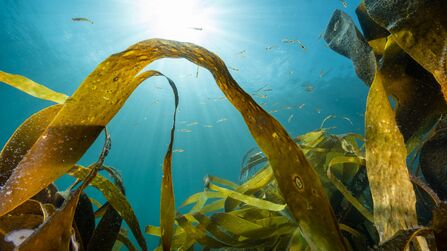
Kelp forest © Lewis Jeffries
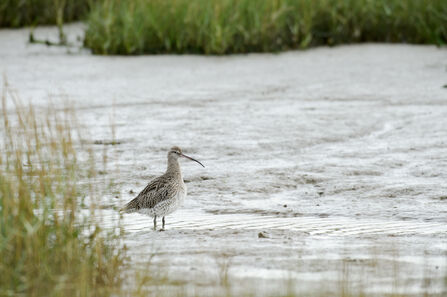
Curlew on mudflats at a saltmarsh © Terry Whittaker 2020VISION
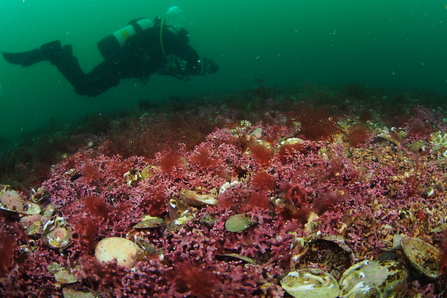
Matt Slater
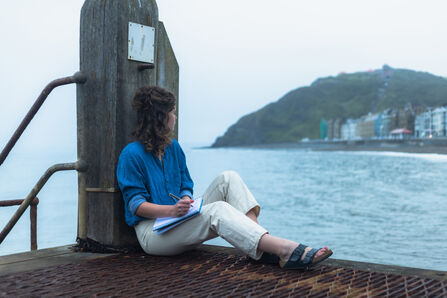
Writing by the sea © The Wildlife Trusts
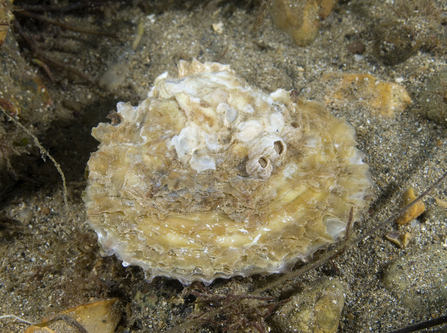
Oyster ©Paul Naylor
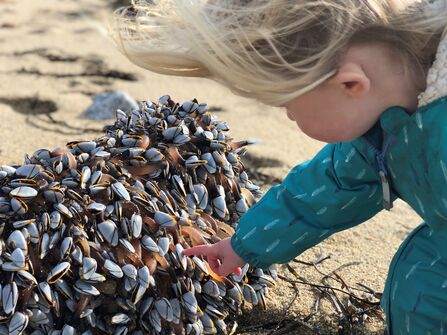
Goose barnacles and child © Lucy McRobert
These special places are at risk
Even though they are so important, these areas are under intense pressure. Wildlife is declining. Whole ecosystems are struggling to cope. Decades of human impact, from intensive fishing and agricultural pollution to poorly planned developments and climate change, have pushed nature at sea to the brink.
Some of the underwater habitats that many animals depend on have almost disappeared. Since 1980, the UK has lost nearly 40% of its seagrass. In Sussex, an astonishing 96% of kelp forests disappeared, before a recent recovery project began to bring them back.
The UK Government promised to protect 30% of our land, rivers and seas for nature by 2030. Whilst Marine Protected Areas have been designated, progress to effectively manage and protect many of these sites from damaging activity has been very slow.
Damaging activities, like bottom trawling, are still allowed across most of the south coast’s sea – including within Marine Protected Areas. At the same time, the climate crisis is causing rising sea temperatures, increased storms and the challenge of new species expanding their ranges into British waters.
Only 15% of Marine Protected Areas (MPAs) are thought to be in favourable condition. 58% of MPAs have at least one designated feature that’s thought to be in unfavourable or declining condition. More effective management measures are urgently needed to protect and recover these special sites.
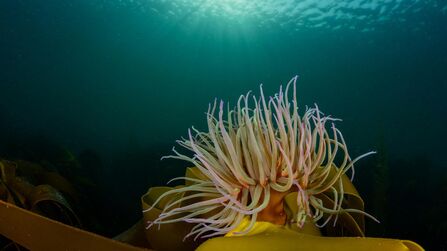
Snakelocks anemone © Martin Stevens

Alexander Mustard/2020VISION

A colourful nudibranch (Facelina auriculata) searching for its food of small hydroids by climbing on a blade of seagrass (eelgrass: Zostera marina) meadow. Helford Estuary, Cornwall, England, British Isles. - Alexander Mustard/2020VISION

Long-snouted seahorse ©Alex Mustard/2020VISION
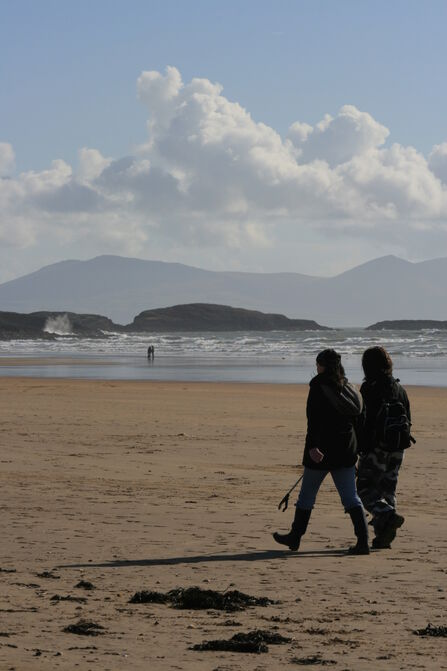
Litter picking on a beach © Nia Jones
What we're doing
For Britain’s seas to recover and truly thrive again, we need bold ideas and big ambition. We want to:
- Reduce the pressures harming our seas
- Help more people to understand, value and play an active role in marine restoration
Everything in the sea is connected – from the native oyster and mussel reefs and kelp forests to the fish, birds and mammals that depend on them. That means we have to work at a seascape-level if we want real, lasting change.
And that’s what the South Coast Marine Recovery Project aims to do.
Wildlife Trusts across Cornwall, Devon, Dorset, Hampshire & the Isle of Wight and Sussex, supported by Royal Society of Wildlife Trusts (RSWT), are joining forces to take action for our seas right across the region.
Together, they’ll support communities to take the lead in ensuring the health of our ocean through a mix of hands-on activities and wider changes that give nature the space it needs to recover.
What this looks like
- Working with communities and stakeholders to co-design practical solutions to enable marine restoration
- Working to reduce systemic pressures on the ocean, such as removing damaging activities or using nature based solutions to restore ecosystems – giving our wildlife the chance to regenerate naturally and thrive
The timeline of the project
A 15-month development phase is taking place from January 2026 – March 2027. This phase will see the Wildlife Trusts working closely with regulators, the fishing industry, local authorities and coastal communities to co-create a shared vision of a healthy, thriving south coast.
The subsequent delivery phase will span several years, putting this plan into action to create long-term change for nature, coastal businesses and local communities, allowing them to flourish together.
Stay in touch
We’ll be sending updates every two months to our mailing list, informing you of how the project is going – and letting you know ways that you can get involved!
Sign up below. The mailing list will be managed by Cornwall Wildlife Trust and your data will be protected in accordance with their Privacy Policy.
You can also contact the team directly by email.
Join interactive talks
You can also join online interactive talks with the project team to find out more about this project and have your chance to help shape a plan for long-term marine recovery across the south coast. Sign up:
Tuesday 22nd September at 7pm
Tuesday 20th October at 7pm
Want to know more about the project?
You can download our Frequently Asked Questions document, to learn more about why this project is needed, what it means for South Coast Marine Protected Areas and how the project will balance the needs of people and nature.
More about the Wildlife Trusts taking part in this project
Five Wildlife Trusts, supported by Royal Society of Wildlife Trusts (RSWT), are involved in this project. Learn more about each Wildlife Trust, their work protecting our seas, and how you can stay in touch with them.
Cornwall Wildlife Trust
Cornwall Wildlife Trust believes in a wilder future for Cornwall, where our wildlife and wild places are cherished for all to enjoy.
The Trust runs an extensive marine conservation programme. Cornwall is home to some of the richest marine wildlife, from tiny, rare and colourful corals to giant basking sharks. The Trust collects data on marine wildlife and habitats, spreads awareness of the threats to marine life and campaigns for better protection for our underwater wildlife.
Devon Wildlife Trust
Devon Wildlife Trust want a world where nature and people thrive together. Devon is the only county in England with two separate coasts, and their coastal waters are some of the UK's most diverse. The Trust works with hundreds of farmers and landowners to improve local water quality, which will have a direct impact on the health of Devon’s coasts and seas. They also show people the wonder of our seas at Wembury Marine Centre, where they host a range of events including rockpool and snorkel safaris.
Dorset Wildlife Trust
Dorset Wildlife Trust leads the recovery and restoration of nature in Dorset and raises awareness of the many ways everyone benefits from nature and can get involved in its restoration. Dorset is home to six Marine Conservation Zones and 142km of coastline. Their marine team works to safeguard their underwater and coastal habitats from the damaging effects of climate change, pollution and invasive species.
Hampshire & Isle of Wight Wildlife Trust
Hampshire & Isle of Wight Wildlife Trust’s vision is for a wilder Hampshire and Isle of Wight where wildlife thrives, not just survives – where nature powers solutions, connects communities, rebuilds resilience and helps both people and planet flourish. The seas around this area are home to some wonderful animals and plants including the colourful dahlia anemone, the magical seahorse and the beautiful cuckoo wrasse. The Trust works to protect the coastline and sea, including restoring precious seagrass and undertaking intertidal surveys.
Sign up for Hampshire & Isle of Wight Wildlife Trust’s newsletter
Sussex Wildlife Trust
Sussex Wildlife Trust want Sussex to be a home for nature’s recovery. A place where people and nature can thrive together, where people can enjoy nature and the health and wellbeing benefits it provides. Their work to protect the seas around Sussex includes working with the marine industry to ensure marine developments avoid environmental damage, monitoring the health of the sea through Shoresearch and Seasearch, and restoring incredible kelp forests.


