

© Jon Hawkins – Surrey Hills Photography
Wild Work Days
Corporate volunteering for conservation
Each year, thousands of business employees join The Wildlife Trusts for practical conservation and team-building experiences, known as Wild Work Days. Delivered by local Wildlife Trusts on nature reserves close to where your employees live or work, these paid volunteering days create meaningful impact for wildlife and local communities – as well as your team.
Employees who participate in these Wild Work Days often return to work feeling happier, healthier, and more positive. Employee volunteering hours deliver measurable social value, supporting your organisation’s obligations in procurement and responsible business practice.
We recorded an £8.50 Social Return on Investment for every £1 invested in Wildlife Trusts volunteering programmes*
To discuss pricing for team volunteering, reach out to your local Wildlife Trust or contact us here about a national agreement for a minimum of 200 employees, per year.
Hands-on corporate volunteering
What does a typical Wild Work Day look like?
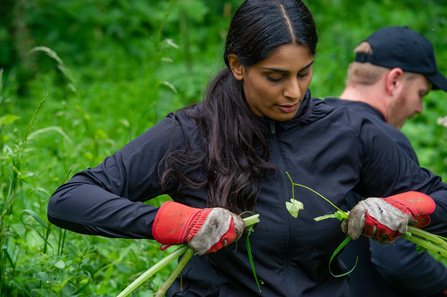
Wild Work Days give business employees the chance to take hands-on action for wildlife and wild places on The Wildlife Trusts’ nature reserves. Activities include scrub cutting, meadow management, fence building or repair, and removing invasive species such as Himalayan balsam - helping habitats thrive across the UK. Site and activity risk assessments are carried out for each day and activity ahead of the session. Tools, equipment and PPE are supplied by the Wildlife Trusts.
Conservation activities vary by location and season, reflecting the habitats each Wildlife Trust manages. For example, spring and summer may have limited on-site work to protect breeding wildlife, while urban-based community projects may still need volunteers. Autumn and winter often offer the greatest opportunities for practical conservation work.
The exact timing and location of Wild Work Days are set by individual Wildlife Trusts to match conservation priorities, ensuring every volunteer makes a meaningful impact.
Wild Work Day group sizes and costs
The number of participants and cost of a Wild Work Day differs depending on the Wildlife Trust hosting the event. Some nature reserves can accommodate larger groups of people, while the majority of our sites are better suited to smaller teams of 10-15 people.
For the most accurate information on availability, group sizes, and costs, contact your local Wildlife Trust directly. They can help you plan a volunteer day that benefits both your team and local wildlife.

Richard Osborne
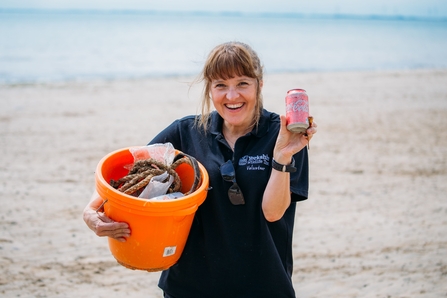
Matthew Roberts
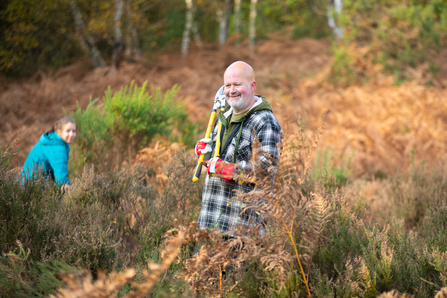
Jon Hawkins, Surrey Hills Photography
National Wild Work Day programmes
These corporate volunteering programmes are organised at a national level by The Wildlife Trusts and are designed to accommodate 200+ employee volunteers across the UK per year.

© Gala Podgornik, Ulster Wildlife
Designed for simplicity and impact, the programme offers:
- Streamlined process: A single Memorandum of Understanding and one-time payment covers all Wild Work Days for the forthcoming year.
- Central coordination: One point of contact manages the overall relationship and facilitates engagement between your offices and multiple Wildlife Trusts nationwide.
- Monitoring and reporting: Employee
- Flexibility and clarity: Clear cancellation and rescheduling policy, with all proceeds contributing to nature’s recovery.
-
Efficient online booking system: Enabling a smooth and effective experience for a lead team member within your organisation to arrange dates and activities for groups of 10–15 employees.

© Tay Aziz
Volunteering for social value, with The Wildlife Trusts
Employee volunteering can be offered by The Wildlife Trusts as a way to deliver social value as part of your organisation’s procurement obligations.
We help bid teams working on public contracts to design and deliver social value that is relevant to their projects and ESG strategies and ensures lasting impact. By getting involved early in your bid process, we ensure your social value offer is strategically aligned, locally relevant, and compelling to commissioners.


*Bagnall et al, Leeds Beckett University (2019): Social Return on Investment analysis of the health and wellbeing impacts of Wildlife Trust programmes