Craig Bennett, chief executive of The Wildlife Trusts, awarded OBE in the New Year Honours list 2026

Craig Bennett, chief executive of The Wildlife Trusts, awarded OBE in the New Year Honours list 2026

Eleanor Church

Craig Bennett, chief executive of The Wildlife Trusts, has been awarded an OBE in the New Year Honours list 2026, in recognition of his outstanding services to the environment – following decades of campaigning and leadership across climate, nature, corporate social responsibility and justice issues.

He was once described by The Guardian as “the very model of a modern eco-general” and Craig has also been included in The Sunday Times Power List of the UK’s top 20 environmentalists. 

As well as his role at The Wildlife Trusts, Craig is an Honorary Professor of Sustainability and Innovation at Alliance Manchester Business School, an Associate Fellow of Homerton College (Cambridge), and a Fellow of The Cambridge Institute for Sustainability Leadership. He is also a Commissioner on the UK Government’s Clean Power 2030 Advisory Commission. 

Craig’s OBE is a tribute to his role as a leader of the modern-day environmental movement.  

Liz Bonnin, President of The Wildlife Trusts, says:  

“Craig Bennett is a true inspiration. He is a passionate, diplomatic and insightful leader who is unapologetic about speaking truth to power.  

“Craig has led The Wildlife Trusts’ federation and nature advocates across the British Isles with integrity, courage and relentless optimism during these challenging times for people and planet. He has encouraged us all to think in a far more interconnected way, guiding our evolution as conservationists and spearheading the holistic and multi-sector approach needed to tackle the scale of our climate and nature crisis. 

“But above all else, he is a kind, empathic individual who believes in the power of equity and collaboration, garnering the support of countless people across society with his style of leadership, and his humanity. He is so deserving of this honour and we are all incredibly proud of him.”  

Craig Bennett stood speaking into microphones on a stage at the Restore Nature Now march

Craig speaking at the Restore Nature Now march in 2024 © Matt Bristow  

Craig Bennett, The Wildlife Trusts’ chief executive, says: 

“I’m very grateful for this honour and would like to send sincere thanks to those who nominated me. My career has focused on trying to join the dots between the nature and climate crises and the need for social justice and system change, and how they are all inextricably linked.  

“In so doing, I’ve been lucky enough to work with local communities campaigning to defend their local environment here in the UK and around the world, while also challenging and sometimes working with large companies to push for greater corporate responsibility and accountability. I’ve also challenged, held to account and worked with politicians from across the political spectrum. 

“When I began my career in the mid 1990s, many people thought of the ‘environment’ as a bolt on, quite separate from the concerns of everyday life. But now, with climate change causing floods and heatwaves on a regular basis, and the breakdown of ecosystem services starting to impact food production, the cost of living and public health, more and more people are getting it. Now we just need our political leaders to follow suit, rather than present an old fashion discredited choice of ‘nature’ or the ‘economy’.  

“What gives me hope is that we are now seeing renewable energy as the norm, regenerative agriculture moving into the mainstream and nature’s recovery starting to happen at scale – including the reintroduction of beavers, white stork and the exciting possibility of lynx on the horizon. When people work together to make change happen, we can sometimes surprise ourselves about how quickly it can happen.” 

Craig began his career at the Environmental Investigation Agency, working to gain protections for the European brown bear and Saiga antelope, and leading undercover investigations into the illegal wildlife trade across Europe and India.  

He then joined Friends of the Earth where he led campaigns on peat and wildlife protection, including working on The Countryside and Rights of Way Act (2000), which continues to benefit both nature and people today, with local communities across the UK having increased access to the countryside as a result. He also led campaigns on corporate accountability, fracking, palm oil, against airport expansion and promoting renewable energy. 

Whilst on the boards of Friends of the Earth Europe and Friends of the Earth International, Craig worked on the challenges faced by local communities and indigenous peoples around the world by helping to build local to global links within and between international social and environmental movements to promote environmental justice.  

When Craig moved to become chief executive of The Wildlife Trusts in 2020, he continued his work to stand up for local communities in their efforts to protect the wildlife and wild spaces they love. For the past five years he has been at the helm of 46 independent Wildlife Trusts — the largest group of grassroots nature organisations in the UK.  

Under his leadership, the membership of The Wildlife Trusts’ movement has grown to nearly a million members, representing more voices for nature than there are members of all UK political parties combined. As a result, both active nature restoration efforts on the ground and the stronger voice of The Wildlife Trusts, have meant a shift towards creating bigger, better and more joined up landscapes for wildlife and people alike to enjoy.  

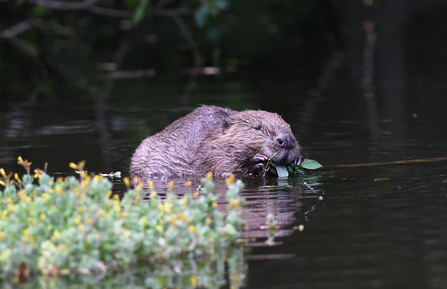
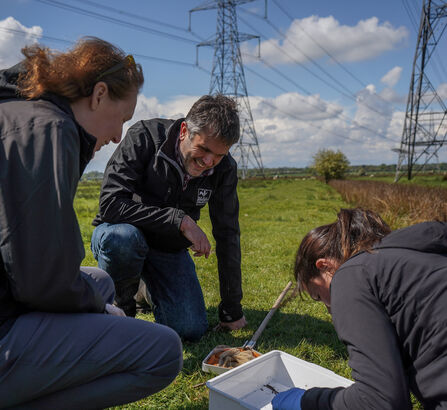
This body of work has included efforts to reintroduce missing species, such as the successful reintroduction of beavers to river systems across England. With legislation for this keystone species now in place, wild releases of beavers should take off in 2026, and Trusts will continue to play an expert role in beaver successes across the country, safeguarding homes, businesses and livelihoods from flooding in the process.  

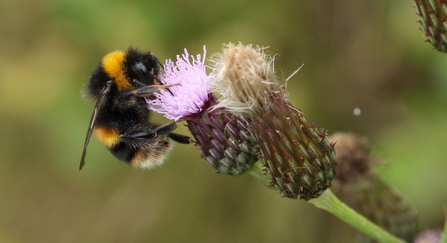
Another significant success under Craig’s leadership has been the ban on the use of neonicotinoids - a toxic bee-killing pesticide used widely in agriculture. Since the beginning of the agricultural transition, Craig has ensured that The Wildlife Trusts’ farm advice service, coupled with advocacy within Whitehall, supports farmers to work with, not against, nature. In so doing, food production, farm resilience and wildlife all benefit. 

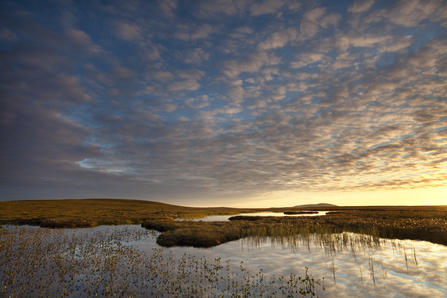
Most recently, Craig spotted an opportunity for a huge nature project in the heart of Northumberland: he is determined that the purchase of the vast and historic Rothbury Estate, in partnership with Northumberland Wildlife Trust, will see a unique integration of wildlife recovery, farming and local community interests to create one of the largest projects of its kind – covering an area the size of Athens. 

The estate sits at the beating heart of a 40-mile nature corridor and if the opportunity is fully realised, it could see a new, emerging nature economy in northern England. Craig’s vision will see The Wildlife Trusts directly contribute to helping the UK achieve its targets under the Global Biodiversity Framework, including the commitment to restore 30% of nature on land and at sea by 2030.  

Now living in Cambridge, Craig has continued to inspire and challenge local communities, business leaders and politicians alike to see the relationship between social, environmental and economic issues.  

Craig has twenty-five years’ experience of designing and contributing to Executive Education and Leadership programmes at numerous universities and business schools around the world, and of providing advice and constructive challenge direct to CEOs and company boards. He is currently Chair of the Independent Challenge Group for Anglian Water. 

He is also a Policy Fellow of The Centre for Science and Policy at The University of Cambridge, a Fellow of the Hawkwood Centre for Future Thinking, a judge on The Wainwright Book Prize, a Trustee of the think-tank Green Alliance, and an Honorary Fellow of the Chartered Institute of Water and Environmental Management (CIWEM). He regularly appears in the print and broadcast media.