From source to sea, together we can turn the tide on the nature and climate crisis

From source to sea, together we can turn the tide on the nature and climate crisis

Rob Stoneman, Director of Landscape Recovery, explores the potential of natural flood management, and why business support is crucial.

Long before “build back beaver” was a glimmer in Boris Johnson’s eye, I was involved in the first urban effort to manage surface water running through a housing estate in Sheffield, keeping it above, and not below, ground. The aim was simple – to stop homes from flooding by channelling rainwater into a park via a series of ponds, thus preventing storm water from overwhelming the sewage system below ground.

A decade later, my colleagues at Yorkshire Wildlife Trust started working with farmers above Leeds, creating woody debris dams in fields upstream – the aim was to hold water and stop it reaching the town so quickly. And, while they were modest efforts, they helped protect homes and businesses in the nearby area from the worst of the flooding.

A little later, in 2013, coastal realignment and flood mitigation works at Alkborough, Lincolnshire, transformed farmland into wetlands, successfully mitigating flooding during the potentially devastating storm surge of that year by reducing the flood peak in the inner Humber.

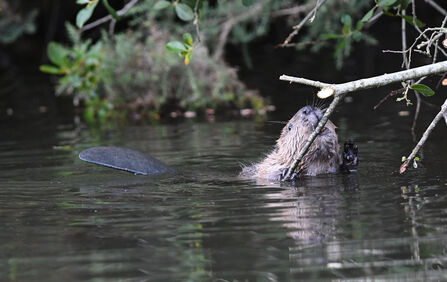
Despite these achievements, over the course of the projects we began to realise that all we were doing was behaving like beavers – and that we needed to get the animals back to repair river systems for free and harness the power of nature across our landscapes.

Over in the Netherlands, the same lesson was being learnt on a grand scale. I’ve seen with my own eyes how restoration works on the Nijmegen Floodplain have not only addressed flooding but also led to significant ecological and economic benefits, transforming the area into a vibrant, attractive place to live.

Whether overseas or on home soil, we now have three decades of experience and all the evidence we need; if we want free or cheap natural flood defences, beavers and other nature-based solutions are often the answer.

And the need to invest in these natural solutions is becoming ever greater. Flooding is the UK’s most expensive natural hazard, costing approximately £2.2 billion (and rising) annually, with devastating impacts to homes and livelihoods nationwide.

With climate change only accelerating extreme weather events and flooding, public funding alone cannot tackle this threat. 

Private investment has a huge part to play in making nature a key ally in the reduction of river flood peaks, sequestering of carbon, and as a buffer from coastal flooding.

The Wildlife Trusts’ current work on natural flood management is living proof of this. Over 200 projects delivered by Wildlife Trusts across the UK - many of which are supported by the insurance industry - are restoring natural processes in and around our rivers and wetlands, reducing the risk of flooding and drought, whilst also ensuring fair benefits for people and wildlife.

Across the UK, pond creation, bog restoration, and the re-wiggling of rivers is helping to hold water back in times of high rainfall and provide base-flow in times of drought. Beavers are being returned to naturally dam small streams too. By storing floodwaters on land upstream, towns and cities downstream are protected from flooding, reducing the damage and disruption it can cause to our everyday lives. Meanwhile, these projects also create new homes for dragonflies, otters and kingfishers and improve water quality: the win-win-win of nature-based solutions.

In urban areas, these impressive results can be right on our doorstep. For example, with the support of Intact Insurance, Gloucestershire Wildlife Trust’s Waterscapes project is using rain gardens and newly created wetlands to reduce the flood risk in vulnerable communities. These natural solutions to managing rainfall in Cheltenham and Gloucester mean that water soaks naturally into the soil rather than flooding homes, storing 2.9 million litres of water and protecting 50 homes and businesses. A similar approach will now be taken in Stroud and Tewkesbury, both of which have suffered from disastrous storm and flooding events in 2025.

Elsewhere, Intact Insurance is working with The Wildlife Trusts on a project to map and analyse the economic, environmental and societal benefits of restoring nature along the entire length of the River Trent. As England’s longest river from source to sea, we’ll be creating a transformational vision for the Trent’s future – thinking at a catchment scale in order to best place flood reduction schemes, plant reedbeds, or apply other nature-based solutions where they’re needed. In doing so, the Rivers 2040 project will create a blueprint that could be applied to all rivers, demonstrating how hundreds of local projects along the river’s course can be brought into a single vision.

Shifting the dial on the health of the nation’s waterways at this scale isn’t just for the good of nearby communities and wildlife, it makes business sense too. Research by Intact Insurance and The Wildlife Trusts, earlier this year, found that for every £1 spent on natural flood management over 30 years, there are £10 in benefits, including the protection of homes, businesses, and entire communities from extreme weather events and storms.

As one of our best defences in a changing climate, recent changes to floods funding policy in England present a significant opportunity for industry to co-fund these natural solutions to flooding. Grey infrastructure – concrete flood walls and the like – will always be required in some situations but natural flood management approaches demonstrably work, are usually far cheaper to install, and create a host of co-benefits, including for wildlife. With 5.2 million properties and two-thirds of the country’s infrastructure, including energy, water treatment, and transport systems, vulnerable to flooding, we must get behind these natural solutions. 

Together, Government grants and private sector funding can harness the power of cleaner, more vibrant waterways to connect and safeguard communities and give a boost to beleaguered wildlife, creating a far more stable environment in which we can all thrive.

Businesses must seize this opportunity with both hands. 

Natural flood management projects are exactly the kind of bold, collaborative and innovative thinking the nature and climate crisis demands of us. While burst riverbanks and polluted homes have rightly been the subject of many an outraged headline over recent years, now is the time to work together to shift the narrative – to one of hope underpinned by pragmatism.

This article was originally published by Business Green.