Nearly half a million people back wildlife on Britain’s future banknotes as final species are revealed

Nearly half a million people back wildlife on Britain’s future banknotes as final species are revealed

The new banknotes will feature an Atlantic puffin, barn owl, buff-tailed bumblebee, and European hedgehog

Today, the Bank of England reveals the four British wildlife species that will feature on the next series of UK banknotes. This decision follows a record-breaking public consultation that attracted nearly 500,000 responses, plus consultation with a panel of experts, including The Wildlife Trusts’ Katy Bell.

Let's take a closer look at the four species chosen by the public - Atlantic puffin, barn owl, buff-tailed bumblebee and European hedgehog.


Atlantic puffin

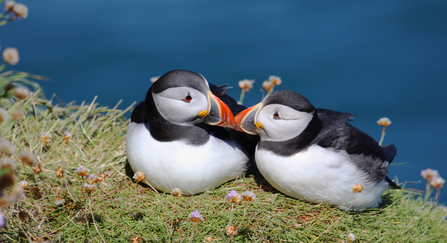
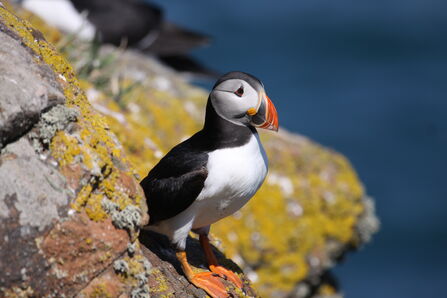
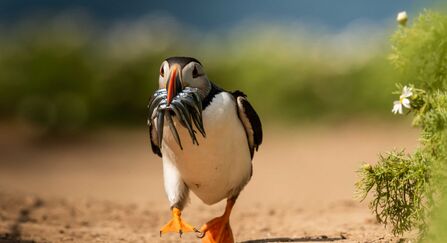
The puffin is instantly recognisable thanks to its brightly coloured, parrot-like bill. They spend the winter out at sea, usually a long way from land. Every spring, thousands of puffins return to the UK to nest on cliffs or offshore islands. They nest in little hobbit-like burrows in the ground, or crevices in cliffsides.
Current threats: puffins face a range of pressures including climate change – which can affect the availability of the fish they rely on – and overfishing. 

Conservation story: one of the greatest conservation success stories can be seen on Skomer Island, where careful habitat management and protection have helped support internationally important seabird populations, including puffins. The Wildlife Trust of South and West Wales’ annual survey of the colony found that 2026 was another record-breaking year, with 52,019 puffins recorded. Elsewhere, at Yorkshire Wildlife Trust’s Flamborough Cliffs, an annual puffin festival celebrates the thousands of seabirds who visit the East Yorkshire coast each year to breed. 

Barn owl 

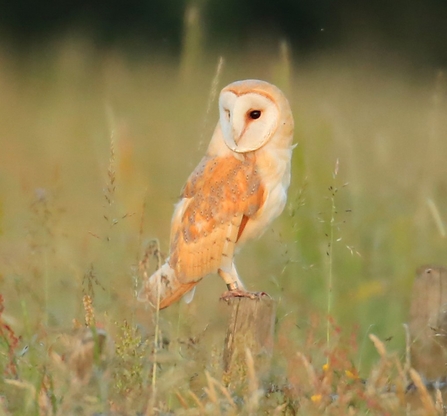
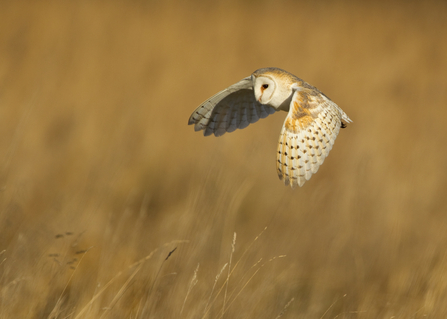
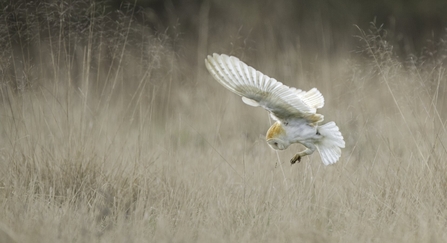
Perhaps our most familiar owl, the ghostly figure of a barn owl is usually spotted at dawn or dusk but will sometimes hunt in the daytime. It can be seen 'quartering' over farmland and grassland, flying back and forth as it searches for its next small-mammal meal. 

Current threats: barn owls rely on healthy grasslands with nearby hedgerows or scrub that support prey such as voles and mice. Changes in land use and loss of suitable nesting sites can affect barn owl numbers. 

Conservation story: Many Wildlife Trusts are involved in the monitoring and erection of barn owl boxes alongside habitat improvements, working particularly with local farmers. Examples include: 

  • Essex Wildlife Trust, together with volunteers, have installed over 300 nest boxes and ringed over 470 individual barn owls.
  • Efforts by Ulster Wildlife to track and record barn owls have seen a bumper year for breeding pairs, despite there being fewer than 30 breeding pairs remaining in Northern Ireland.
  • At the Rothbury Estate, Northumberland Wildlife Trust have been setting up barn owl nest boxes and a group of volunteer birders have been closely monitoring barn owls on the site to track their breeding success (video clips included in Dropbox link below – all obtained with minimal disturbance). 

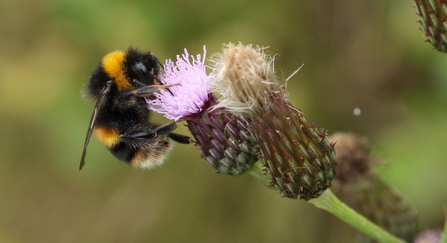
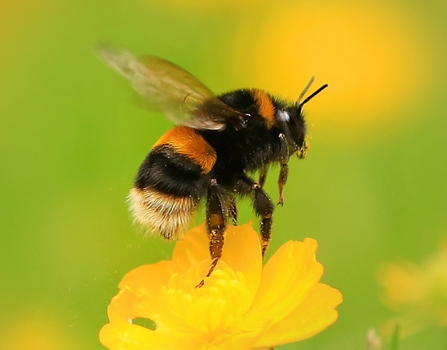
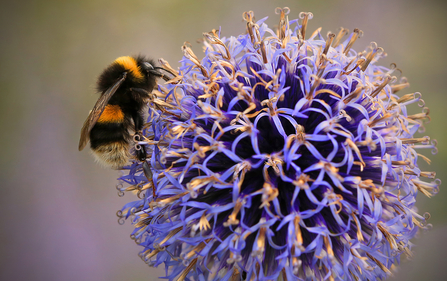
Buff-tailed bumblebee 

Buff-tailed bumblebees are one of our biggest bumblebees, as well as one of the first to emerge in early spring. They nest underground in large groups of up to 600 bees, often using old mammal nests, and need nectar rich flowers throughout the spring and summer on which to feed.

Current threats: like many pollinators, buff-tailed bumblebees benefit from flower-rich habitats that provide nectar and pollen throughout the year. Grass that is left longer over winter also helps them to have more opportunities to find nesting sites. They have suffered steep declines due to habitat loss, land use changes, and pesticide use. 

Conservation story: The Wildlife Trusts have been restoring flower-rich meadows across the UK, collaborated with farmers and land managers around nature-friendly farming practices, and led on wildlife-friendly gardening initiatives to help encourage more people to make space for pollinators such as the buff-tailed bumblebee. 

How people can help: leaving areas of gardens to grow a little wilder and planting pollinator-friendly flowers can provide essential food for bumblebees and other wildlife. The No Mow May initiative started by Plantlife is a particularly important intervention for bumblebees. 

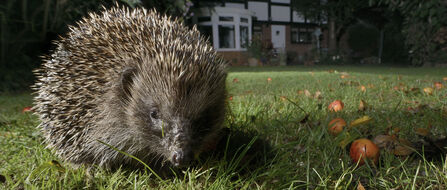
European hedgehog

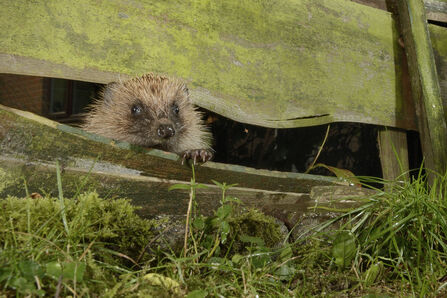
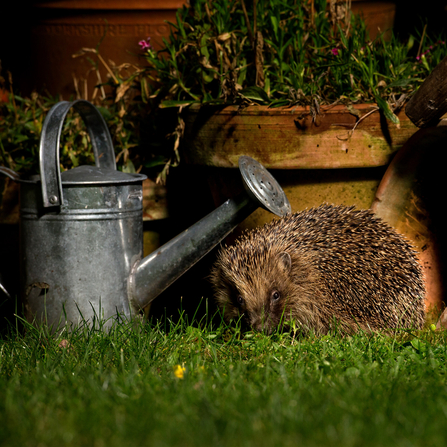
One of the UK’s favourite mammals, European hedgehogs are found all across the UK and are unmistakable thanks to their protective coat of spines. They are nocturnal and are one of the few mammals in the UK that truly hibernates through winter.

Current threats: hedgehogs are currently classed as vulnerable to extinction in Britain. Reasons for their decline include habitat loss, a reduction in food owing to insect loss, and difficulty in moving between green spaces due to obstacles such as roads and garden fences. 

Conservation story: Ulster Wildlife is undertaking the first-ever GPS tracking project for hedgehogs in Northern Ireland, revealing the hidden and often hazardous journeys these familiar garden visitors make each night. The project will help to inform conservation action and demonstrate the importance of connecting gardens in towns and cities. 

How people can help: the best way to help hedgehogs at home is to make your garden as wild as possible. The Wildlife Trusts also recommend people add a ‘hedgehog highway’ – a small hole in garden fences — to make it easier for hedgehogs to travel between gardens in search of food and hibernation spots. 

Katy Bell, senior conservation officer at Ulster Wildlife and banknote panellist, says: 

“The Wildlife Trusts are delighted that some of the UK’s best-loved wildlife species will be taking centre stage on our banknotes. It’s been fantastic to see the sheer number of responses to this consultation, as it goes to show just how much nature means to people. 

“The four chosen species all have a special place in people’s hearts, but with their images stamped across our banknotes, they should also serve as stark reminders that nature needs our help. Whether it’s creating flower-rich meadows for species like the buff-tailed bumblebee, community efforts to build hedgehog highways, protecting our seas and shorelines for marine life like the Atlantic puffin, or restoring our grasslands for the sake of the barn owl, nature needs us now more than ever. We hope these banknotes will continue to inspire people to celebrate the wildlife on their doorstep and support efforts to restore nature across the UK.” 


The public's passion for nature is clear

The consultation received a total of 478,531 responses, making it the Bank’s most responded-to imagery consultation to date. This overwhelming public response reflects the deep affection people across the UK have for the nature and wildlife on their doorstep. It also echoes a recent poll by More in Common, commissioned by nature charities including The Wildlife Trusts, which found that Britons’ love for – and pride in - nature extends across the political spectrum. 

Yet while the public’s passion for wildlife is clear, many of Britain’s most-loved species continue to face significant pressures, from habitat loss to climate change. 

The Wildlife Trusts argue that these new banknotes come at a pivotal time for nature recovery, and that significant action needs to be taken to protect and restore the wildlife people care so deeply about. This is backed by a new report published earlier this week, which found that the UK is off track to meet its target to halt and reverse nature loss by 2030. A wealth of evidence also shows that when nature thrives so do we. Nature is necessary for us all.

As the UK’s biggest movement for nature, The Wildlife Trusts continue to restore habitats, advocate for better nature protection, and encourage communities to connect with the nature on their doorstep, including the four species chosen by the public to feature on the new banknotes.