

Green shieldbug © Tom Hibbert
How to identify shieldbugs
What is a shieldbug?
Shieldbugs are a group of related insects, generally with a shield-like shape. They are part of the order Hemiptera, which is commonly known as the true bugs. Shieldbugs look a bit like beetles, but instead of biting mouthparts they have a straw-like structure called a rostrum. This is tucked underneath the head and thorax when it's not being used. Young shieldbugs (called nymphs) grow in stages, known as instars. There are five instars, with each looking a little more like the adult.

Green shieldbug illustrated by Katy Frost
Which shieldbugs am I likely to see?
Shieldbugs are often fairly large and sometimes colourful, making them relatively easy insects to spot. Many species can regularly be found resting in the open on low-growing plants or higher up on trees. These include the common green shieldbug, red-legged shieldbug and hawthorn shieldbug. Other species, like the turtle shieldbug and bordered shieldbug, are more secretive and prefer to scurry about on the ground beneath their favoured plants. Here are some of the species you might spot.
Common green shieldbug
When & where: All year, spending the winter as an adult. Widespread in the UK, though patchy in Scotland. In gardens, parks and many other habitats. Often on low-growing plants, like brambles and nettles.
Description: A large, bright green shieldbug (though it turns brown for the winter), with a dark brown wing membrane and reddish antennae.
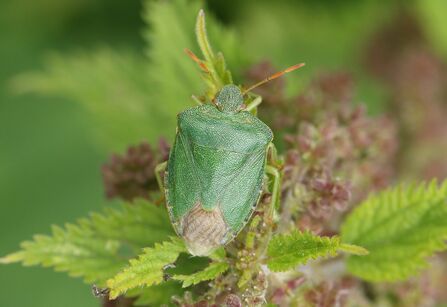
Common green shieldbug © Vaughn Matthews
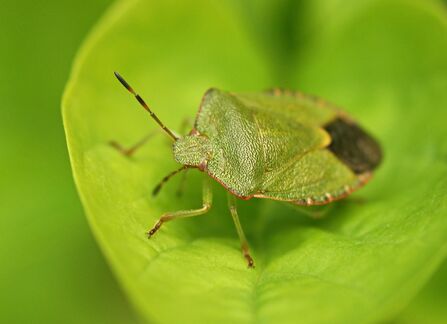
Common green shieldbug © Rachel Scopes
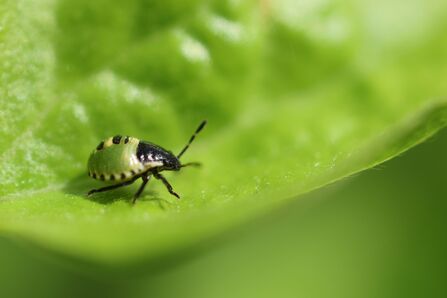
Second instar nymph of green shieldbug © Tom Hibbert
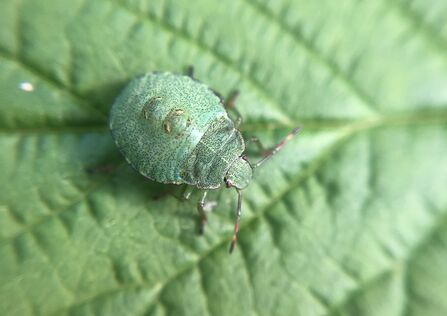
Fourth instar green shieldbug nymph © Tom Hibbert
Southern green shieldbug
When & where: All year, spending the winter as an adult (often indoors). A recent arrival in England, which became established in the London area. It has since spread, but it still local to southern England. Often found on allotments around various foodplants.
Description: Adults are very similar to the common green shieldbug, but more uniformly green and the wing membrane is pale (beware freshly emerged common green shieldbugs, before their wing membrane darkens). Another key feature is the row of white spots at the front of the scutellum, with a dark mark at each end. Nymphs look very different. They are black at first, gradually becoming greener.
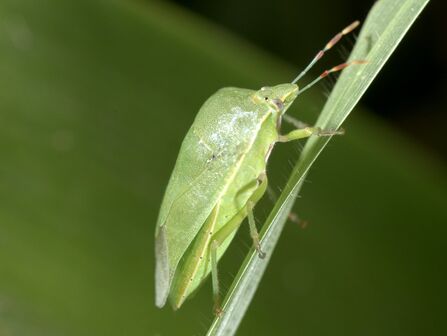
Southern green shieldbug © Brian Eversham
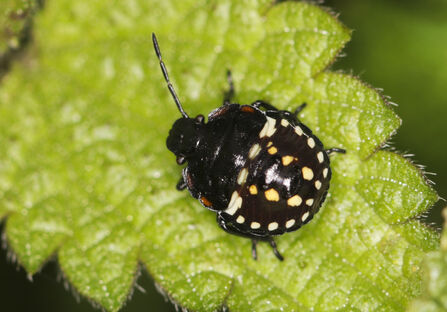
Third instar southern green shieldbug nymph © Frank Porch
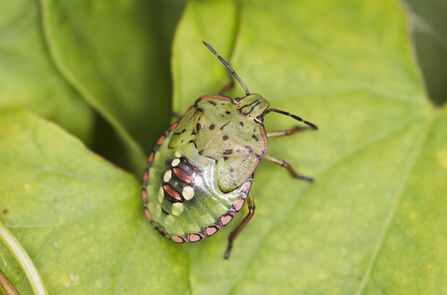
Fifth instar southern green shieldbug © Frank Porch
Gorse shieldbug
When & where: All year. Widespread in the UK. Usually found on gorse or sometimes broom, though nymphs may also feed on other plants, including dyer's greenweed.
Description: Spring adults are green with a bright yellow edge to the pronotum and abdomen. The new adults that mature in summer have reddish brown on the forewings and lower part of the pronotum. Both colour forms have red antennae and a yellow edge to the pronotum.
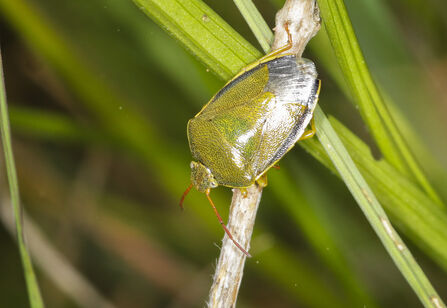
Gorse shieldbug © Frank Porch
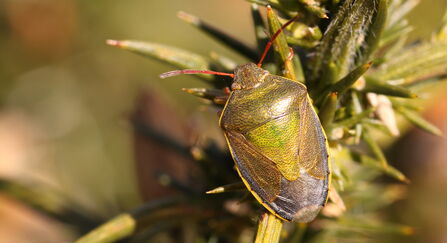
Gorse shieldbug © Vaughn Matthews
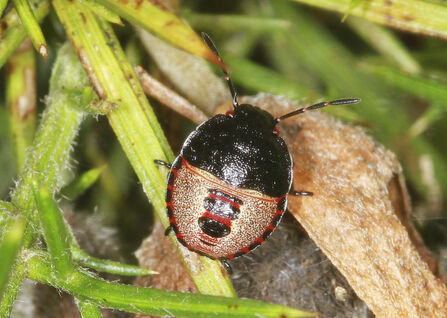
Mid instar gorse shieldbug nymph © Frank Porch
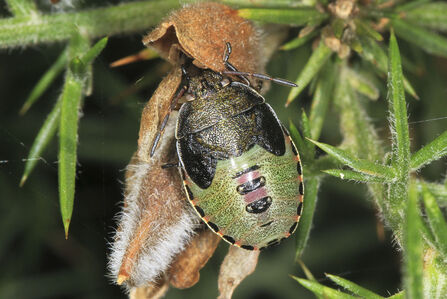
Final instar gorse shieldbug nymph © Frank Porch
Hawthorn shieldbug
When & where: All year, overwintering as an adult. Common across the UK. Found in parks, gardens and woodlands on a range of trees and shrubs. They are attracted to lights at night. Nymphs are often found on hawthorn berries in summer and early autumn.
Description: A very large, elongate green shieldbug speckled with dark spots. There are reddish-brown markings on the back. The 'shoulders' are prominent and red-tipped, whilst the scutellum is green (compare these features to birch shieldbug).
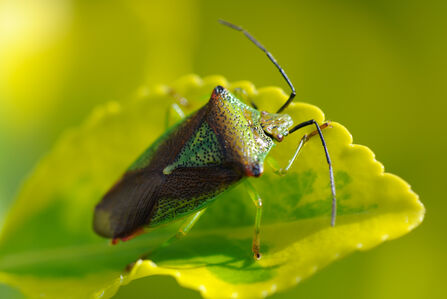
Hawthorn Shield Bug ©Amy Lewis
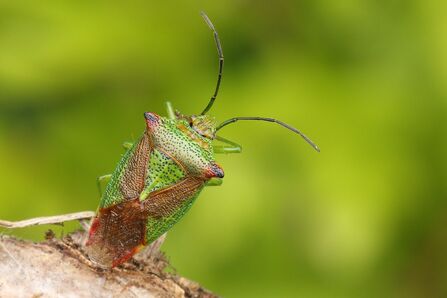
Hawthorn shieldbug © Vaughn Matthews
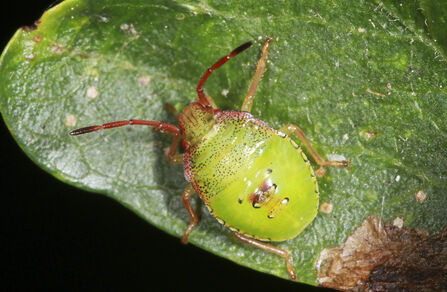
Fourth instar hawthorn shieldbug nymph © Frank Porch
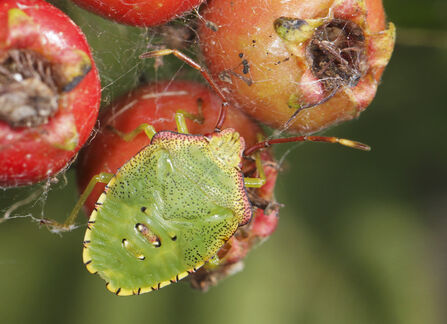
Fifth instar hawthorn shieldbug nymph © Frank Porch
Birch shieldbug
When & where: All year, overwintering as an adult. Found widely across the UK, in woodlands with birch trees. Attracted to lights at night.
Description: A fairly large red and green shieldbug. It looks similar to the larger hawthorn shieldbug, but is less elongate and has less prominent 'shoulders', without the extensive red markings. There is also some red on the scutellum.
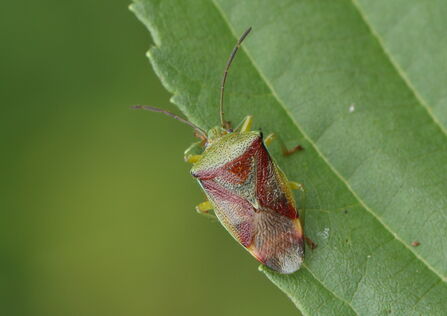
Birch shieldbug © Vaughn Matthews
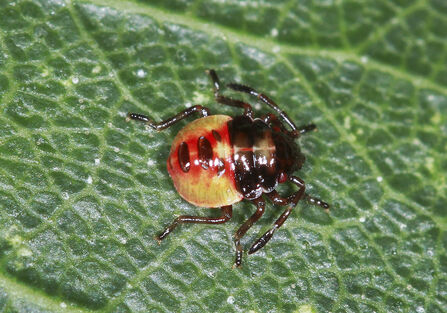
Second instar birch shieldbug nymph © Frank Porch
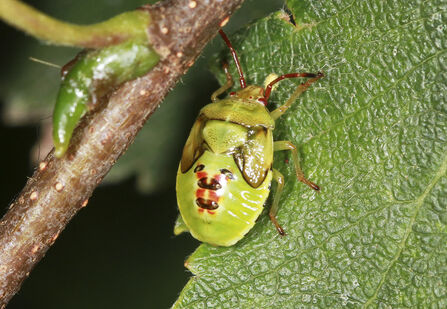
Fifth instar birch shieldbug nymph © Frank Porch
Juniper shieldbug
When & where: All year, overwintering as an adult. Once restricted to juniper in southern England, but now spread more widely, including records in Scotland, Wales and Northern Ireland. Found on juniper and ornamental cypress trees, so is often present in parks, gardens and cemeteries.
Description: A fairly large, green shieldbug with a curving, pinkish-red marking on each side of its back.
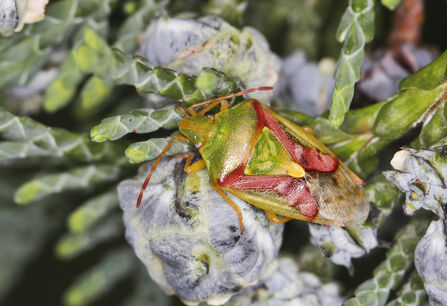
Juniper shieldbug © Frank Porch
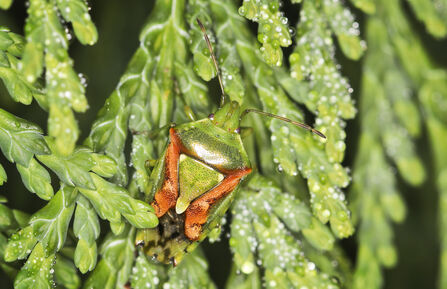
Juniper shieldbug © Frank Porch
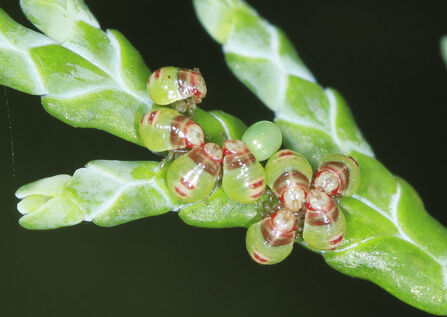
First instar juniper shieldbug nymphs © Frank Porch
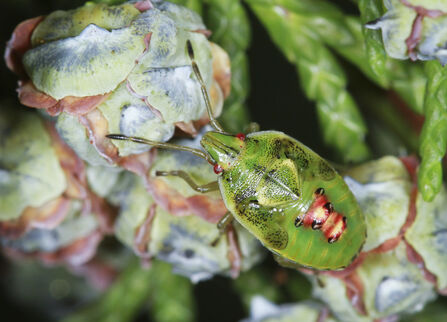
Final instar juniper shieldbug nymph © Frank Porch
Parent bug
When & where: All year, overwintering as an adult. Common across the UK, though more patchily distributed in Scotland, Wales, Northern Ireland and the north of England. Usually found on the leaves of birch or alder trees, where females guard their eggs and young nymphs.
Description: A medium-sized, mottled reddish-brown shieldbug. The connexivum has black and white bands and there is usually a black patch on the scutellum. Nymphs are quite stripy.

Parent bug guarding eggs © Philip Precey

Parent Bug brooding eggs ©Philip Precey
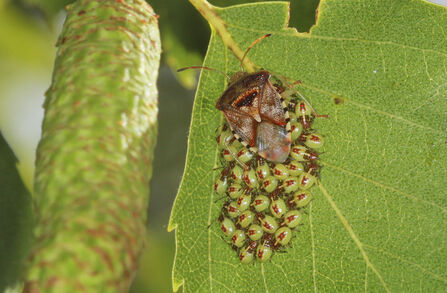
Parent bug with nymphs © Frank Porch
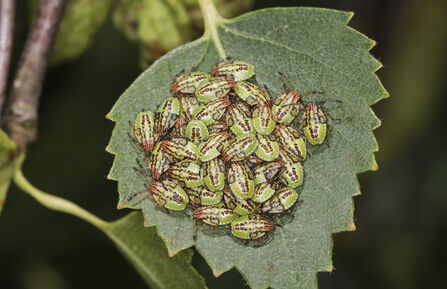
Mid instar parent bug nymphs © Frank Porch
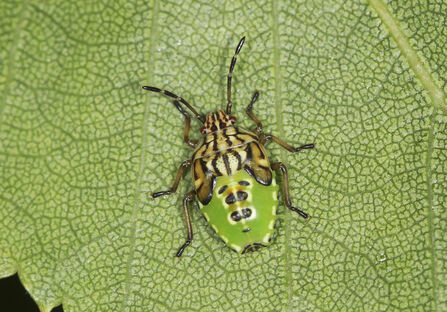
Final instar parent bug nymph © Frank Porch
Red-legged shieldbug (also known as forest bug)
When & where: Adults from June to November, nymphs at other times of year. Widespread across the UK. Usually in wooded areas. Attracted to lights at night.
Description: A large, brown shieldbug with prominent 'shoulders', reddish-orange legs and a pale tip to the scutellum. This is one of the few shieldbugs that doesn't spend the winter as an adult, so nymphs found in winter and early spring are likely to be this species.

Forest Bug ©Philip Precey
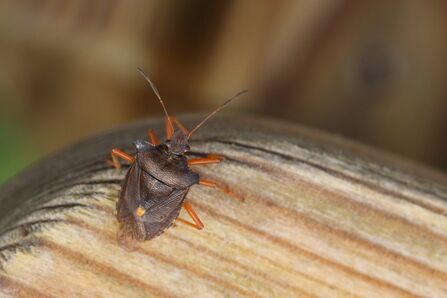
Red-legged shieldbug © Vaughn Matthews
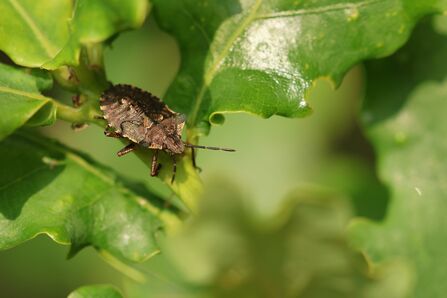
Final instar red-legged shieldbug nymph © Tom Hibbert
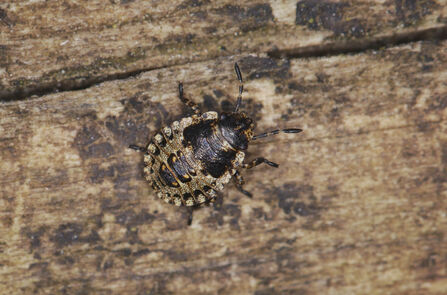
Second instar red-legged shieldbug nymph © Frank Porch
Spiked shieldbug
When & where: Adults from July to November. Widespread across the UK. Heathland, grassland, woodland edges.
Description: A large, brown shieldbug with distinctive spiked 'shoulders'. It spends the winter as an egg or young nymph, with adults appearing in summer. Early instar nymphs are the colour of a dark red wine. Final instar nymphs are often a marbled greyish colour with pale bands on the legs and yellow bands on the antennae.

Spiked Shield Bug ©Philip Precey

Spiked shieldbug © Tom Hibbert
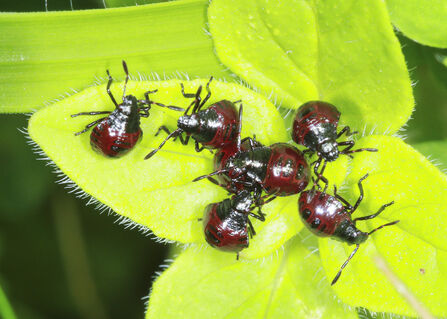
Early instar spiked shieldbug nymphs © Frank Porch
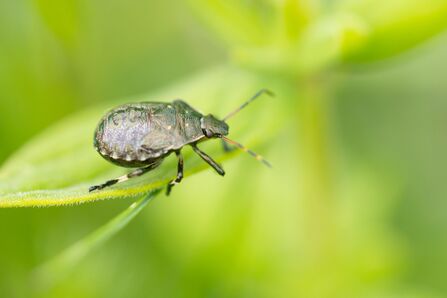
Final instar spiked shieldbug nymph © Tom Hibbert
Bronze shieldbug
When & where: All year, spending the winter as an adult. Found widely across the UK. A woodland shieldbug, found on both deciduous and evergreen trees.
Description: A large, brown shieldbug with a bronze metallic sheen. It has broad 'shoulders' and the antennae have a distinctive orange band near the tip.
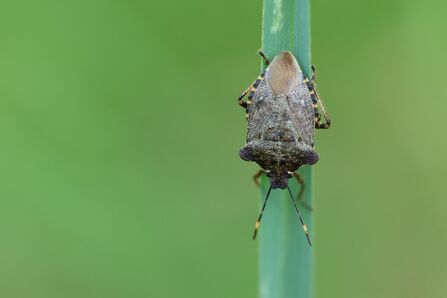
Bronze shieldbug © Tom Hibbert
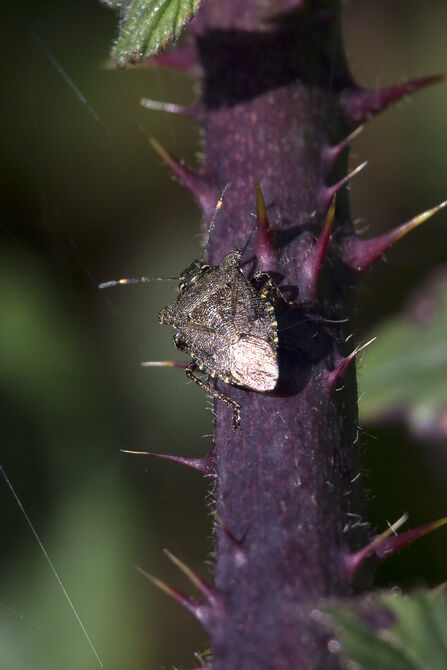
Bronze shieldbug ©Chris Lawrence
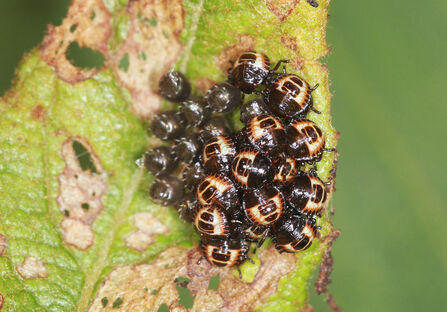
First instar bronze shieldbug nymphs © Frank Porch
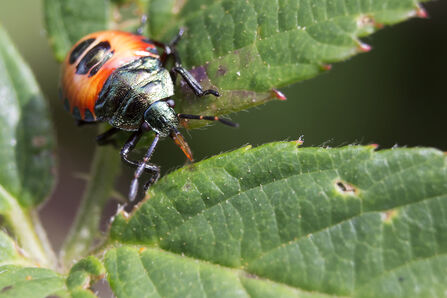
Bronze shieldbug nymph ©Chris Lawrence
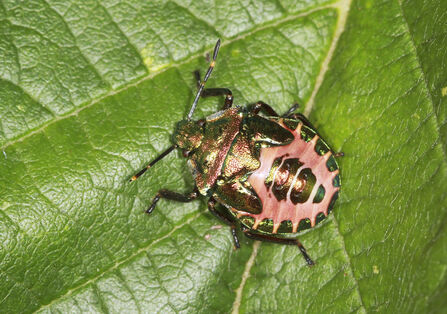
Fifth instar bronze shieldbug nymph © Frank Porch
Mottled shieldbug
When & where: All year. A recent arrival in the UK, found around London and south-east England but spreading north. Found on a range of trees and shrubs.
Description: A large, mottled brown shieldbug, with mottling also on the wing membrane. The antennae have cream bands. Nymphs also have a mottled appearance and banded antennae.
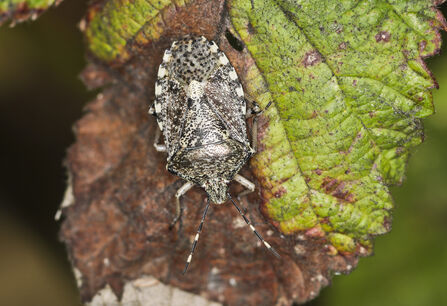
Mottled shieldbug © Frank Porch
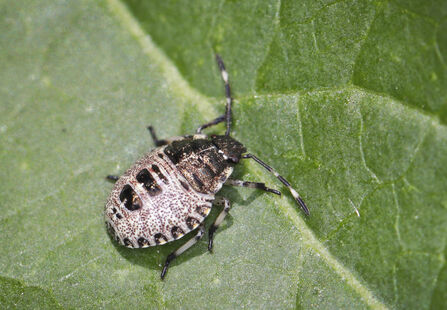
Early instar mottled shieldbug nymph © Frank Porch
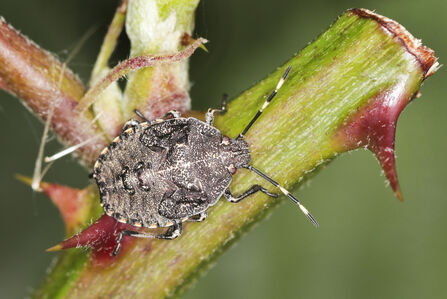
Late instar mottled shieldbug nymph © Frank Porch
Hairy shieldbug
When & where: All year. A common shieldbug across most of the UK, though more patchily distributed in northern England and Scotland. Often found along hedgerows and the edges of woodland.
Description: A large, distinctively hairy, purple-brown and green shieldbug. The antennae and connexivum have a banded pattern. The nymphs are also extremely hairy.
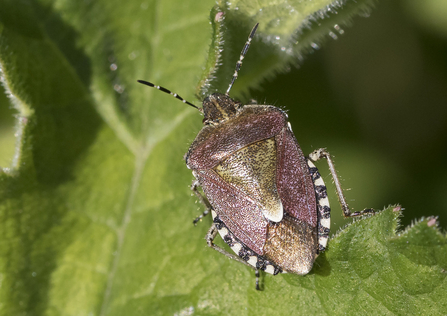
Hairy shieldbug © Chris Lawrence

Hairy shieldbug © Chris Lawrence
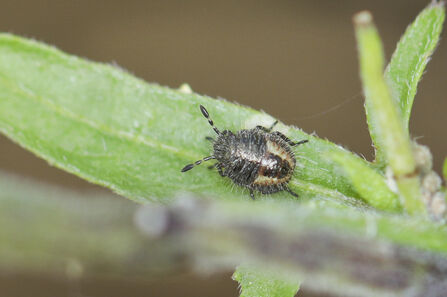
Early instar hairy shieldbug nymph © Frank Porch
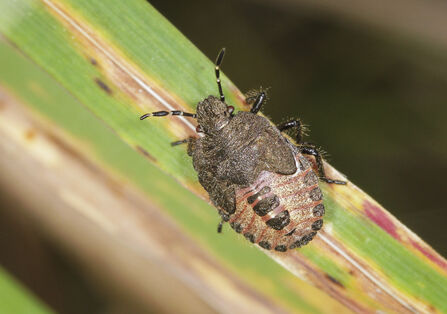
Late instar hairy shieldbug nymph © Frank Porch
Bishop's mitre shieldbug
When & where: All year. Widespread and common across much of southern Britain, though more coastal in Wales. Found in long grass in a variety of dry, grassy habitats, including sand dunes.
Description: A large, distinctively shaped brown shieldbug with a pointed head. Nymphs are rather elongate and oval.
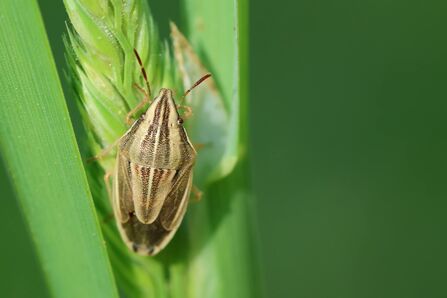
Bishop's mitre shieldbug © Tom Hibbert
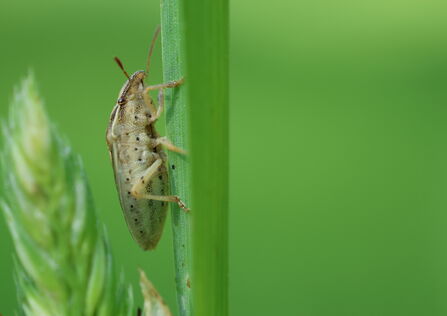
Bishop's mitre shieldbug © Tom Hibbert
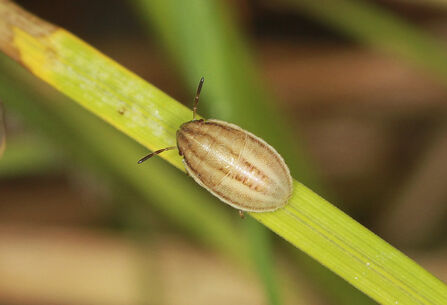
Mid instar nymph of bishop's mitre shieldbug © Frank Porch
Tortoise shieldbug
When & where: All year. Widespread and common across southern Britain, spreading north. Found in a variety of grassy habitats.
Description: A large, rounded brown shieldbug. The colour varies and some can be quite reddish-brown. There is a very similar scarce tortoise shieldbug found in southeast England, which can be difficult to tell apart. Tortoise shieldbug is more common and has a notch at the front of the head, which is absent in scarce tortoise shieldbug.
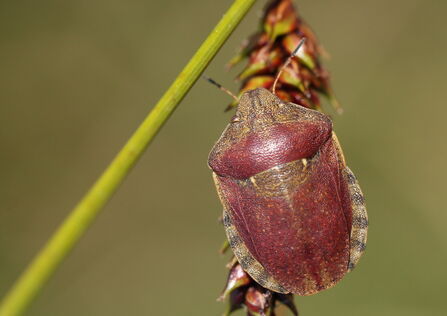
Tortoise shieldbug © Vaughn Matthews
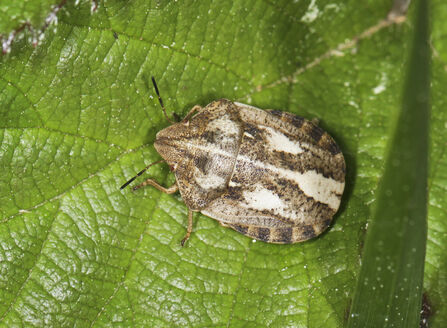
Tortoise shieldbug © Frank Porch
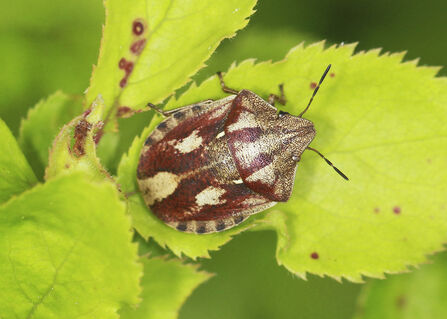
Tortoise shieldbug © Frank Porch
Woundwort shieldbug
When & where: All year. Widespread across England as far north as Yorkshire, though rarer in the southwest. Found patchily in the far east of Wales. Found in woodland clearings, hedgerows and sometimes gardens, often on hedge woundwort or white dead-nettle.
Description: A small, whitish-grey and bronze shieldbug with coppery patches. The connexivum has black and white bands.

Woundwort shieldbugs © Philip Precey

Woundwort shieldbugs © Philip Precey
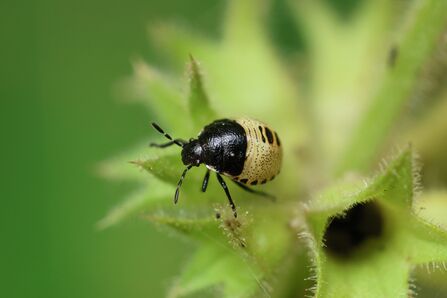
Woundwort shieldbug nymph © Tom Hibbert
Heather shieldbug
When & where: All year. Scattered widely across the UK but never common. Usually found around heather on heathland and moorland, where they feed on the larvae of heather beetles.
Description: A medium-sized, dark mottled brown and metallic bronze shieldbug. Each leg has a pale or orange band on the tibia. There is usually a pale line running from front to back across the middle of the pronotum.
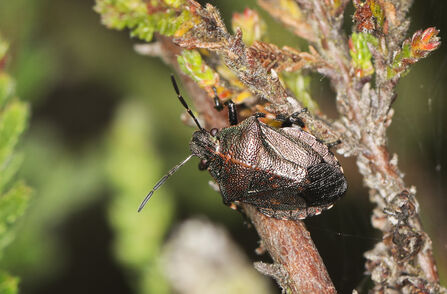
Heather shieldbug © Frank Porch
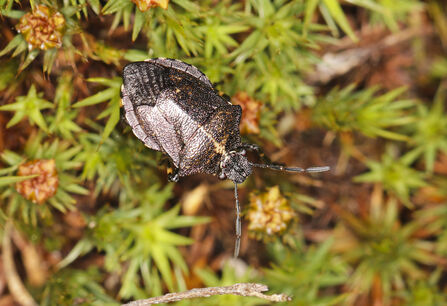
Heather shieldbug © Frank Porch
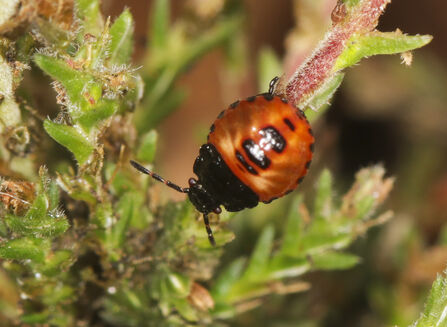
Mid instar heather shieldbug nymph © Frank Porch
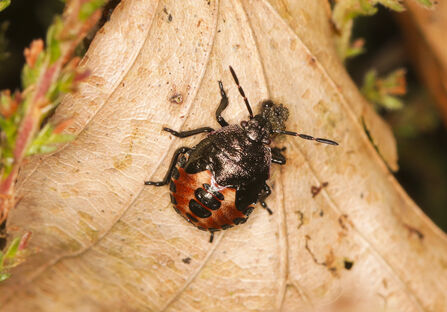
Final instar heather shieldbug © Frank Porch
Blue shieldbug
When & where: All year. Present across Britain, though rarer in Scotland and northern England. A few records from Northern Ireland. Usually found on low-growing plants in open areas, from woodland rides to heathland and parks. It's a predator, mostly hunting beetles.
Description: A medium-sized, metallic blue-green shieldbug. Nymphs have a metallic blue hue to the front of their body.
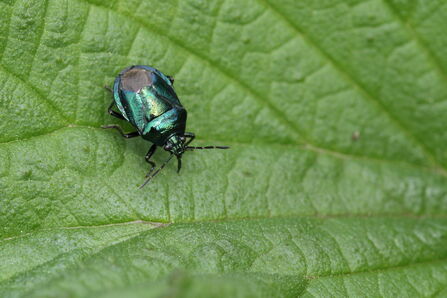
Blue shieldbug © Vaughn Matthews
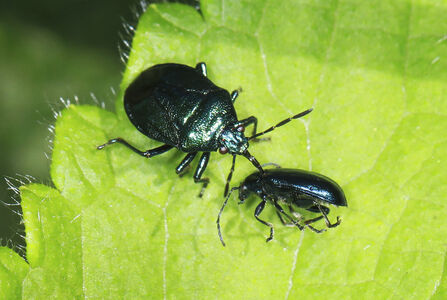
Blue shieldbug with beetle prey © Frank Porch
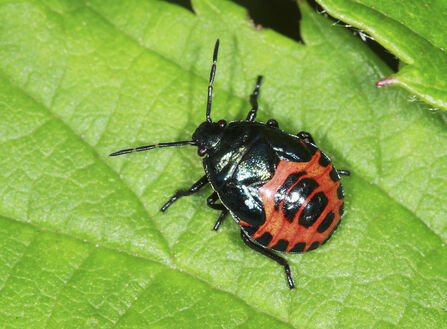
Final instar blue shieldbug nymph © Frank Porch
Brassica shieldbug
When & where: All year, overwintering as an adult. Widespread in southern and central England, also found in southeast Wales with scattered records in other regions. Found on brassica plants, particularly garlic mustard and horse-radish.
Description: A medium-sized, metallic blue-black shieldbug with bright markings. The markings are usually red or white, but can also be yellow or orange. Nymphs are black and bright yellow.
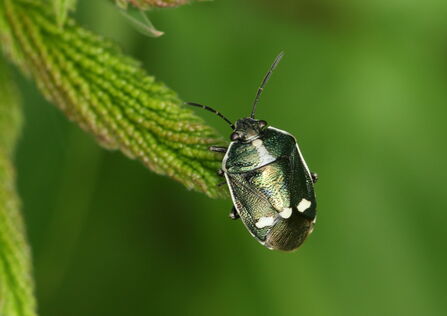
Brassica shieldbug © Vaughn Matthews
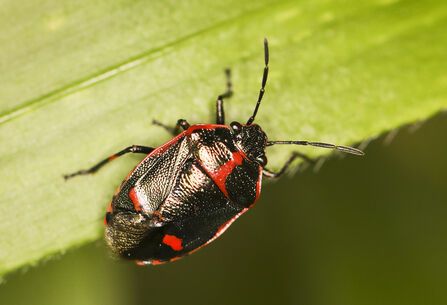
Brassica shieldbug © Frank Porch
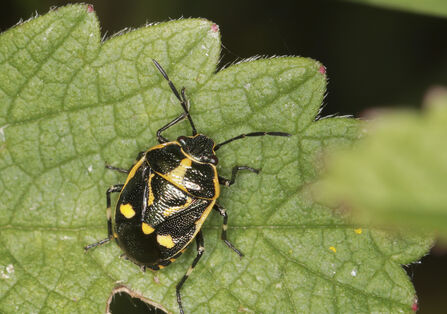
Brassica shieldbug © Frank Porch
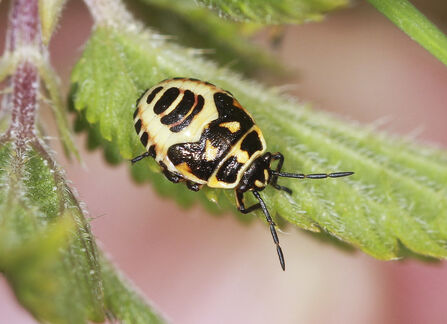
Final instar brassica shieldbug nymph © Frank Porch
Pied shieldbug
When & where: All year. Widespread in southern and central England. Scattered records in Wales. Along hedgerows, in woodland rides and sometimes gardens. Usually found on white dead-nettle or sometimes black horehound.
Description: A medium-sized, black and white shieldbug with a brown wing membrane. There is a very similar species found in southeast England called Rambur's pied shieldbug. This has a black wing membrane and more extensive white margins on the pronotum.
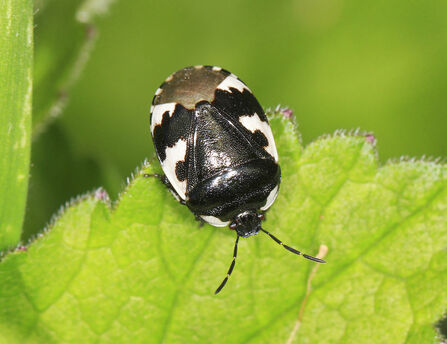
Pied shieldbug © Frank Porch
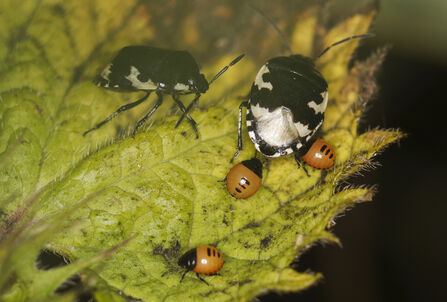
Pied shieldbugs with early instar nymphs © Frank Porch
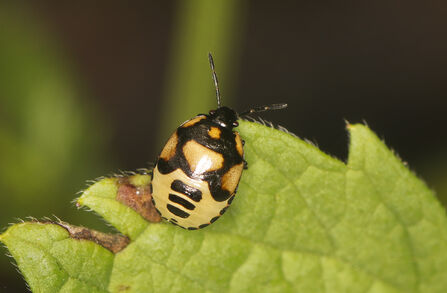
Final instar pied shieldbug nymph © Frank Porch
Forget-me-not shieldbug
When & where: All year. Patchily distributed across southern and central England and eastern Wales. Found around forget-me-nots, so can be present in gardens. Usually on the ground beneath the plants, but sometimes climbs up them.
Description: A medium-sized, completely black shieldbug. There are several similar species, but most are smaller and have some white markings.
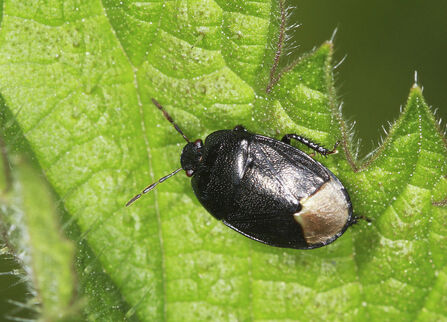
Forget-me-not shieldbug © Frank Porch
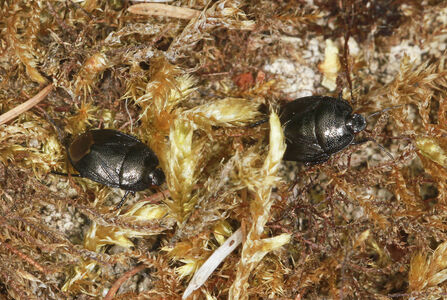
Forget-me-not shieldbugs © Frank Porch
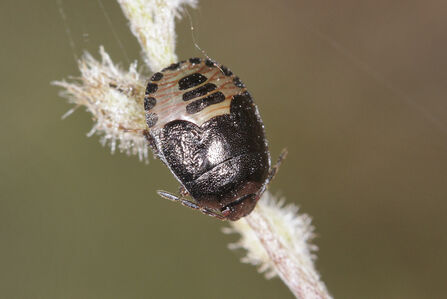
Final instar forget-me-not shieldbug nymph © Frank Porch
Rarer shieldbugs
Turtle shieldbug
When & where: All year. Widespread across southern and central England, with scattered records in south Wales. Not commonly seen as it spends a lot of time on the ground.
Description: A fairly small, brown shieldbug with a distinctive projection either side of the head. These give it the alternative name of knobbed shieldbug.

Turtle shieldbug © Frank Porch
Small grass shieldbug
When & where: All year. Patchily distributed across southern Britain. Found in grassy areas.
Description: A small, brown shieldbug with a thin pale stripe running from the back of the head onto the scutellum.

Small grass shieldbug © Tom Hibbert
Lesser-streaked shieldbug
When & where: Mostly seen in June and July. A scarce species, found in coastal sand dunes and some sandy heaths in southern England. It burrows around the base of stork's-bill plants.
Description: A very small, pale brown shieldbug with bands of silvery hairs. There is an even rarer greater-streaked shieldbug, which is slightly larger and lacks the silvery hairs. Recently, it has only been seen in Kent and Pembrokeshire.

Lesser-streaked shieldbug © Tom Hibbert
Bordered shieldbug
When & where: All year, but most often found in spring. Widespread in southern Britain, but rarely seen. Burrows into the base of bedstraws in dry, sunny areas.
Description: A small, black shieldbug with a white outer edge to the forewings that almost reaches the brown wing membrane. The much rarer heath shieldbug looks similar, but only the front third of the forewing has a white edge.

Bordered shieldbug (c) Frank Porch
Scarab shieldbug
When & where: All year. A scattered distribution across southern Britain. Lives around violets or field pansies on dry, sandy or chalky soils. Can be found in moss, leaf litter or with a bit of luck crossing a track.
Description: A small, rounded, slightly-metallic black or bronze shieldbug with a humped appearance.

Scarab shieldbug © Frank Porch

Bishop's mitre © Tom Hibbert
Invite shieldbugs into your garden
From planting a hedge to letting grass grow long, we've got plenty of tips for creating a home for shieldbugs and other wildlife.