

Jon Hawkins – Surrey Hills Photography
Nature at The Rothbury Estate
From skylarks singing from above, to heather growing underfoot and adders warming themselves in the sun, The Rothbury Estate is full of life – and we want to see that grow.
Some of our rarest wildlife depends on this land. The dramatic uplands are home to curlews, snipe and lapwings, and its woodlands provide a refuge for red squirrels, endangered in Great Britain.
In spring, Simonside is alive with the sound of skylarks singing high in the air as they mark out their territories and try to attract a mate. In summer, flowers such as harebell, wild thyme, devil's-bit scabious, maiden pink, rockrose and mountain pansy bring colour to the grasslands. Atlantic salmon and critically endangered eels swim in the estate’s rivers and its riverside woodlands support rare summer breeding birds such as wood warbler, redstart and pied flycatcher.

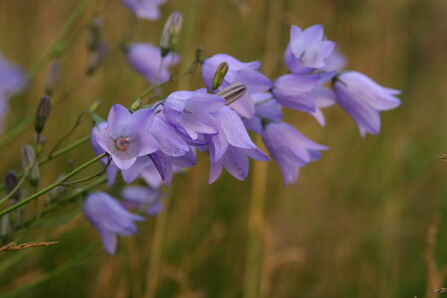
© Kieron Huston
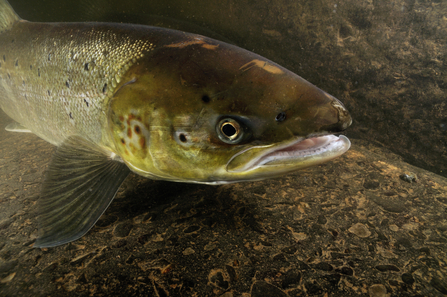
Atlantic salmon ©Linda Pitkin/2020VISION
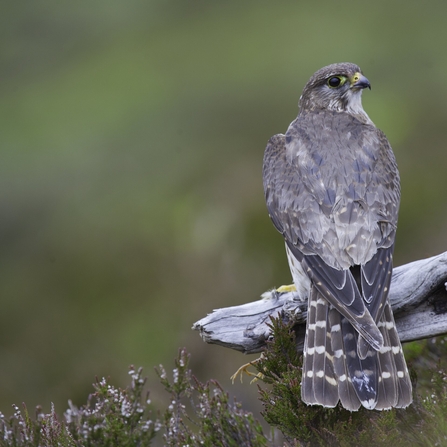
Female Merlin on perch by Rob Jordan/2020VISION
The estate already provides a home for special wildlife like the cuckoo and merlin – the UK’s smallest falcon. In the future, we could see secretive pine martens moving softly through the forests and majestic golden eagles soaring above the iconic Simonside Hills; beaver on the waterways and eventually European bison in woodland glades.
Meet some of the stars of The Rothbury Estate
Cuckoo

Jon Hawkins – Surrey Hills Photography
A cuckoo is a summer visitor to Britain, arriving from Africa in late March and April. They are famous for laying their eggs in other birds’ nests, fooling them into raising their young.
Curlew

Curlew ©Terry Whittaker/2020VISION
The curlew is a very large, tall wader, about the same size as a female pheasant. Its haunting call ('cur-lee') is unmistakable and can be heard from February through to July.
Red squirrel

Red squirrel (Sciurus vulgaris) in flowering heather, Inshriach Forest, Scotland. - Peter Cairns/2020VISION
Native red squirrels are a lot rarer in the UK than their American cousins, grey squirrels. Usually found in coniferous woodland, they like to feast on hazelnuts by cracking the shell in half. If you’re lucky you may also find pine cones that have been nibbled, leaving what looks like an apple core behind!
Harebell

©Bruce Shortland
The delicate, nodding bells of the harebell are one of the prettiest additions to our hedgerows, grasslands, hillsides, sand dunes and cliffs. Flowering between July and September, the harebell mostly grows on dry, undisturbed ground, but is tolerant of all kinds of habitats.
Atlantic salmon

Atlantic Salmon ©Jack Perks
The Atlantic salmon spends most of its life at sea, but makes an epic journey back to the river or stream in which it hatched to spawn.
Wild thyme

Wild thyme ©John Bridges
The delightful fragrance of wild thyme can punctuate a summer walk over a chalk grassland. It forms low-growing mats with dense clusters of purple-pink flowers.
A new nature corridor to help wildlife thrive
The Rothbury Estate will become the beating heart of a 40-mile nature corridor in the north of England. Stretching from the North Sea coast at Druridge Bay in the east, to the Scottish-English Border uplands at Kielderhead and Whitelee National Nature Reserves.
Looking to the future
Our vision is of a future Rothbury Estate where communities and nature thrive side-by-side. We want to see more wildlife and more opportunities for the local economy - including the move to regenerative farming.
We want to work together with communities to build back wildlife abundance and diversity, by restoring the natural processes and connecting the land at scale.
Explore more about The Rothbury Estate


River © John Millard Photography