CBD COP17: what happened and what comes next?

CBD COP17: what happened and what comes next?

CBD COP17 concluded last week in Armenia. But what was the outcome for nature? Zoe Quiroz Cullen, Head of Climate and International Policy, shares her thoughts.

In October nearly 200 countries gathered at the UN nature conference, COP17, in Yerevan, Armenia.  

In 2022 these countries adopted the Kunming-Montreal Global Biodiversity Framework (KM-GBF), with 23 shared Targets to halt and reverse nature loss by 2030.  

Four years on, COP17 marked the halfway point to 2030, and was the moment to review progress towards the Targets, take stock and negotiate a pathway forward.  
 

Overall the message on progress is worrying

Whilst the UK is on track to meet just three of the 23 KM-GBF Targets, globally this number falls to just one. Against the backdrop of climate change driving ever more extreme weather, and the growing evidence of the necessity of nature for the resilience of our communities, economies and wildlife - these delays have real consequences. 

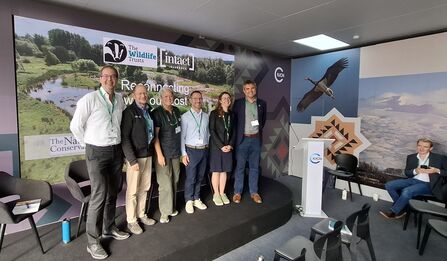
Six members of The Wildlife Trusts team at COP17. They are posing in front of a beautiful mural outlining a world where people live in harmony with nature

The Wildlife Trusts delegation at COP17

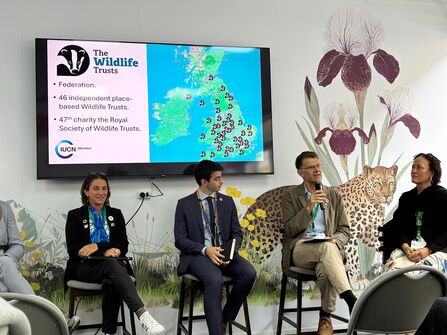
The Wildlife Trusts were in Yerevan to shine a light on the progress, and the gaps, in the UK to date. on the critical role of local action for nature recovery in driving progress nationally and internationally - and to call for accelerated implementation across the board.   

Responsive Coloured Box

What we wanted to see at CBD COP17

1. A strong response to the global review of progress. Recognition that the costs of delay are rising and COP17 must be the acceleration moment, with political commitments to speed-up delivery across all targets.

2. New and significant progress to close the finance gap for nature recovery and redirect harmful finance and incentives that degrade nature loss towards investments and activities that restore it.

3. Increased cooperation and simplified processes to tackle nature loss and climate change effectively, together – across the relevant UN conventions, and with support to governments to achieve this domestically.

4. Strong focus on the need for the whole of government and society for this to succeed, including finance, planning, health and energy departments; sub-national governments, communities and businesses. Nature is a necessity for all – we need to act and make decisions that reflect that.

What happened at COP17


On a strong response

Countries adopted the text on the global review of collective progress towards KM-GBF implementation, noting the finding of significant delays with “deep concern”, calling for accelerated implementation and increased ambition, and laying out the Yerevan Pathway of priorities going forward. While some language was weakened, the message is clear: what matters next is the changes countries make back at home, to speed up and get back on track. However, accelerated implementation and increased ambition, also depend heavily on the next point…. 
 

On financing nature recovery

COP17 was a platform for some significant new funding commitments, with announcements totalling nearly $2 billion. It was inspiring to see the momentum behind funding for tropical forests through the Tropical Forest Forever Facility, with the Netherlands adding to earlier commitments, including from the UK. 

There were also loud cheers for Brazil, where the re-election of Lula the day before was a vital win for the Amazon, and therefore the world. Still, finance commitments for nature fall far too short, with many calling out the reality gap between ambition and resources to act.   

We did see important shifts, however. Perhaps the most startling nature finance fact, is that globally, for every $1 spent to protect and restore nature, about $30 is spent on subsidies and investments that continue to harm it. 

GBF Target 18 is all about redirecting that tidal wave of nature-negative finance - to shift the balance of finance flows in favour of nature recovery, and resilient economies and communities. This is one of trickiest targets for countries to tackle, and highly sensitive, but for the first time it was a major focus of discussions within the negotiations and outside.
 

On joined up action on nature and climate

With nature deeply impacted by a changing climate, but also vital to reducing its effects and building resilience to it, many environmental NGOs were paying close attention to discussions on strengthening coordination and action on these issues within the UN system and within countries. 

New text was adopted at COP17, which maintained recognition of this critical issue but lost language that would have given it greater strength and moved the agenda significantly forward.   

As for many aspects of the discussions, the increasing complexity of the world and its geopolitics loomed large. Importantly, COPs are also a platform for groups of countries to collaborate outside the negotiations – creating ‘coalitions of the willing’ to go faster on key issues. As COP17 drew to a close, the Presidencies (country coordinators) of the three ‘Rio Conventions’, on biodiversity, climate change and combatting desertification, released a joint declaration on speeding up action for nature through effective use of the links between these Conventions. Eyes now turn to the climate negotiations, starting in Türkiye next week, to build on this momentum.  
 

On the whole of society

Beyond the urgency to accelerate nature recovery, one message that shone through throughout COP17 is that while the negotiations are challenging and slow, the real work of implementation is in on the ground. It is here where inspiring examples of progress and leadership shine through, and support must continue to be focussed. 

From sub-national governments and businesses building their strategies for water security on nature recovery, to the critical role of devolved governments, such as Wales and Scotland in driving ambition tailored to place; to the work of Indigenous peoples, local communities, women, young people, farmers, fishers and NGOs who are cracking on with action, on land and in the ocean. 

The announcement of The Wildlife Trusts’ purchase of The Rothbury Estate, on the last full day of COP17 was one such beacon of hope. It marks the beginning of a journey to protect and restore 3,800 hectares of precious habitat for nature, climate and people, blending nature with regenerative agriculture and forming part of a 40-mile corridor of thriving ecosystems across Northumberland. 
 

Nature is necessary

Finally, the message that nature is a necessity seems to be landing – and that is changing the conversation. Fixing nature is not ‘just’ an environmental issue. It is about food security, water security, the stability of our supply chains and economies at large, our health and wellbeing. 

In our connected world, it is also not an issue we can solve alone. The UK Government’s study into the links between ecosystems and national security is making waves internationally. The Wildlife Trusts will continue to work to ensure this clarity from Government translates into joined-up and accelerated action on nature recovery across the UK, and beyond – and playing our own part in that mission. 

Reflections from The Wildlife Trusts' delegation

Holly Gray, from Berks, Bucks & Oxfordshire Wildlife Trust, speaking at an event at COP17. She is sat in a circle of individuals, speaking into a microphone

Holly Gray, from Berks, Bucks & Oxfordshire Wildlife Trust, speaking at an event at COP17

Holly Gray from Berks, Bucks & Oxfordshire Wildlife Trust:

"It was fantastic to be part of The Wildlife Trusts’ delegation who also connected me with UK chapter of the Global Youth Biodiversity Network (GYBN UK) to learn from their impressive team and be a part their UK Youth delegation too.

"Global targets cannot be achieved without local people and communities delivering for nature on the ground. This experience has given me a whole new perspective and understanding of the importance of the work of local Wildlife Trusts and groups like us, our partners, volunteers, members, supporters, and others, and the role they play in making a local, national, and global impact."

Dr Samantha Andrews, Rachel Sharp, Karen Stothard and Katie-jo Luxton hold up a Welsh flag at COP17

Dr Samantha Andrews, Rachel Sharp, Karen Stothard and Katie-jo Luxton at COP17

Rachel Sharp, Director of Wildlife Trusts Wales:

"At the halfway point to 2030, the Welsh Government must move beyond commitments and demonstrate how it will deliver the Global Biodiversity Framework in Wales. Wales has its own environmental legislation, but we have yet to see clear, credible plans for meeting key targets, from protecting and effectively managing 30% of our land, rivers and seas to reducing nitrate pollution in Welsh rivers. We have strong partnerships in Wales, ready to help turn these commitments into action. The Welsh Government must now build on that strength and deliver on its promise of a Nature and Climate Plan that brings nature recovery and climate action closer together. With 2030 fast approaching, these promises must translate into coordinated action and measurable progress."