

Credit: Lianne De Mello
How nature can help tackle climate change
When they are healthy, habitats can help combat climate change through naturally storing carbon and helping us to adapt to the impacts of climate change. They can:
- lock away carbon
- slow the flow and reduce the risk of flooding
- store water in the landscape and help reduce drought and wildfire risk
- provide shade and cooling from hot temperatures
- maintain healthy soils, clean water and the pollinators needed for our crops
- improve our health and wellbeing
Where habitats address societal challenges such as climate change, biodiversity loss, health and food and water security, we refer to them as nature-based solutions.
Restoring and protecting nature can store carbon
Peatlands, woodlands, saltmarsh and ocean sediments are just a few of the incredible natural carbon stores that we must better protect. When in good condition, these habitats are nature-based solutions to climate change by removing carbon dioxide from the atmosphere and storing it, acting as ‘carbon sinks’.
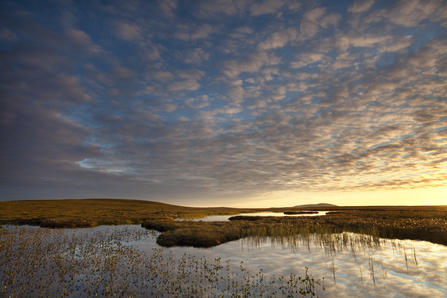
Mark Hamblin/2020VISION
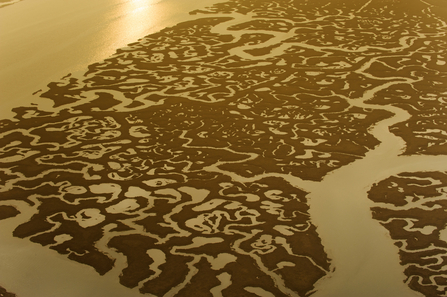
Saltmarsh at Abbotts Hall, Essex Wildlife Trust. Saltmarsh is a natural solution to climate change © Terry Whittaker/2020VISION
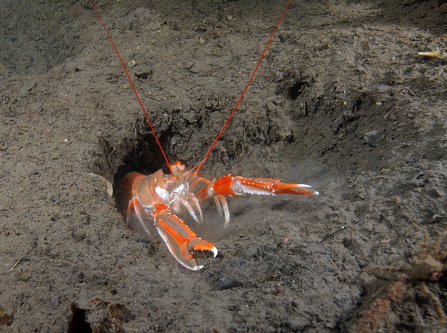
Sediment Scampi Shieldaig (c) Paul Naylor
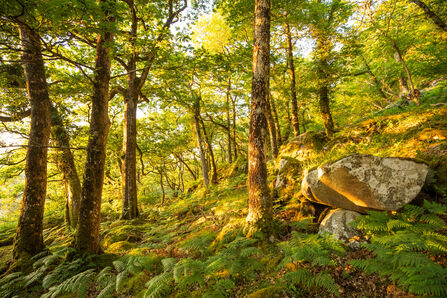
© Ben Porter
Nature itself is at risk from climate change, but if we help it to recover, its potential to store carbon means it can help us turn the tide on the climate catastrophe.
Globally, natural carbon sinks on land have removed 31% of human-made carbon emissions1 in recent years – and our soils contain more carbon than is stored in plants and the atmosphere combined!
Our oceans have absorbed 23% of human-made carbon emissions1 in recent years. Carbon is part of the whole system, stored in the tissues of the plants and animals, and in the mud and sediment.
1 Source: IPCC
Restoring and protecting nature can help cope with extreme weather
Restoring and protecting habitats can provide nature-based solutions to climate change by helping us cope with and adapt to its impacts now and in the future.
Natural flood management, such as tree planting, wetland creation, and reintroducing beavers, can minimise the impacts of flooding. Re-wetting and storing water in the landscape is also vital for building resilience to drought and wildfires, protecting both wildlife and people.
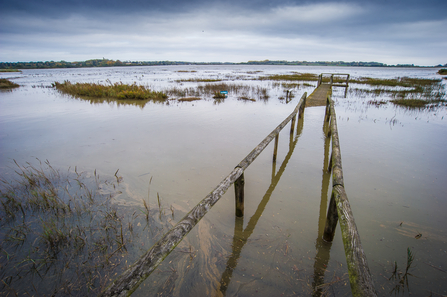
Flooding at Fingringhoe Wick in Essex by Matthew Roberts
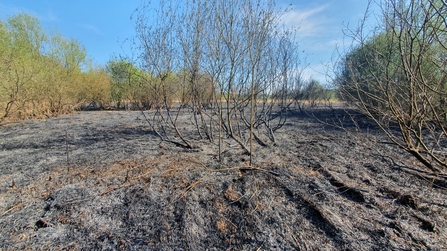
Potteric Carr nature reserve fire damage by Katie Baker
Creating and protecting green and blue spaces, such as trees, ponds, watercourses and wetlands, helps both wildlife and people cope with extreme heat. Green spaces provide cooling mechanisms such as shading,
Conserving and restoring important habitats and species on the coast, such as saltmarsh and seagrass, helps protect wildlife and communities from storms, flooding, and sea-level rise.
Working with farmers and landowners to implement nature-friendly practices helps boost resilience to climate change and supports nature. This supports food and water security during times of extreme weather, such as flooding and drought.
Nature-based solutions also improve health and well-being
Nature-based solutions for climate also bring enormous benefits for people’s health and well-being. Whether it’s providing access to nature-rich spaces, helping with air and water quality, or enabling mental health benefits through community participation.
What we want to see
Nature-based solutions can contribute significantly to achieving net zero greenhouse gas emissions for the UK, help wildlife and society adapt to climate change, and provide wide-ranging benefits such as supporting our mental health and wellbeing. We need a rapid scale up of nature-based solutions and a significant increase in investment to make this happen, strongly supported by Government and private sector.
We want to see:
- nature-based solutions at the heart of local and national decision-making, such as planning and development
- climate change being actioned with urgency
- a co-ordinated approach across the whole of Government and suitable advice services.


