Puffins, from folklore to fragility

Join Meg Dobson, Email Marketing Officer, as she explores the folklore that ignited our fascination with puffins and the challenges that threaten their future.

Long before weather warnings flashed across phone screens, fishermen watched the wind-bitten cliffs for signs of storms. Blue skies could lull you into ease, until someone pointed seaward at a small, black-and-white bird skimming low over the raucous waves, turning inland towards the towering headland. The puffins had returned.

According to Icelandic folklore, puffins were able to predict an approaching storm. And why not trust them? These birds spend most of their lives riding the swells of the Atlantic Ocean. They eat, sleep and weather the winter out on the open water. A creature that lives almost entirely beyond the horizon must be a natural interpreter of the weather’s mood.

To Inuit and Alaskan tribes, puffins were more than barometers…they were weather shapers. These seabirds were spotted navigating raging winds with a wingspan barely wider than a child’s outstretched arms. They vanished into furious waves, only to emerge unharmed moments later. Their durability against the sea’s chaos surely inspired the belief that they could command the weather itself.
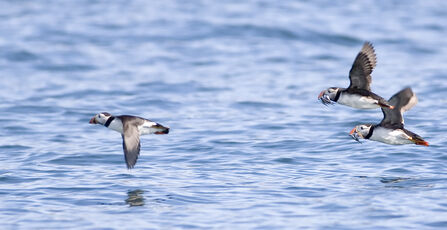
Fishing communities revered puffins not just for their supposed forecasting abilities, but also for their extraordinary hunting skills. When a puffin disappears beneath the froth, it’s no aimless dive. These birds can reach depths of more than forty metres, holding their breath for over a minute in pursuit of sand eels and herring. Underwater, puffins do not simply swim…they fly! Their short, powerful wings beat underwater up to 400 times per minute, whilst their tangerine coloured feet steer like rudders.

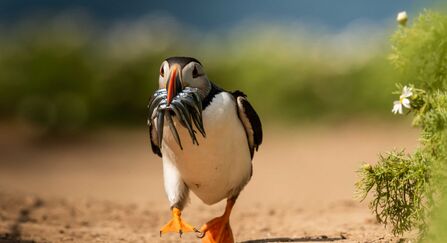
One rather skillful puffin was once recorded carrying eighty-two small sand eels at once, its barbed tongue and serrated bill securing its catch. 


To mariners, a puffin’s calico beak became an arrow pointing to abundance, assuring them that their nets would return full of fish.

In Irish folklore, puffins were believed to house the souls of monks. Their upright posture and bowed heads as they scurry along resemble monks in solemn contemplation. This association surely inspired their scientific name, Fratercula, which translates to “little brother” or “little friar”.

Yet their sombre attire is more practical than spiritual. Their black backs conceal them from predators above, while their white bellies blend with the light from the surface, hiding them from predators below. This kind of camouflaging is called countershading.

Like monks living by sacred routines, puffins follow traditions of their own. Puffins form devoted pair bonds, returning each year to the same mate and burrow. Together, they will raise a single chick, or “puffling,” taking turns incubating or going on endless fishing trips to hunt for food. The couple will strengthen their bond through billing, a courtship behaviour where they tap their beaks together.

Perhaps puffins never predicted storms or returned as reincarnated monks. But magic or not, these seabirds captured the imaginations of those who watched them.

Puffins in Love!

Puffins on Skomer Island by Lynne Newton

Today, though, the world they navigate has grown unforgiving. Storms are fiercer. Seas warmer. Pollution intensifies. Classified as vulnerable, puffins now face threats more suited to dystopian fiction than to folklore.

Following persistent storms, puffins have recently been found washed up on our shorelines, showing signs of exhaustion and starvation. The frequency and intensity of storms are expected to increase with climate change. 

Yet stories still hold power. Just as ancient beliefs kindled wonder, they can now inspire responsibility. Every tale told, every question asked, is a step towards protecting these birds and caring for the wild spaces they call home.

So, pause for a moment. Spin a yarn about the puffin who predicted a storm or the tiny friar of the crags. Let fascination become action, through a litter pick, a change in energy use and by reporting dead or injured puffins and other seabirds to local conservation groups. In doing so, you can help keep puffins on our coasts and not just in our legends.


More about puffins