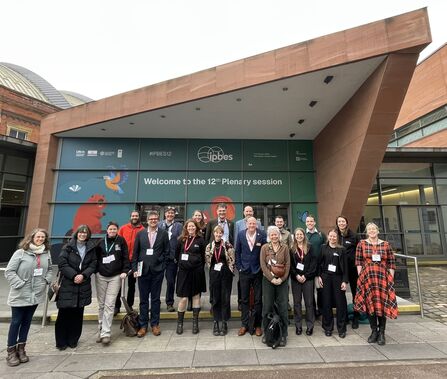

Last week, Manchester hosted the 12th plenary of IPBES (the Intergovernmental Science-Policy Platform on Biodiversity and Ecosystem Services) – the biodiversity equivalent of the Intergovernmental Panel on Climate Change.
IPBES brings together world-leading experts to assess the state of nature and provide governments with authoritative evidence. Hosting the plenary in the UK created a rare opportunity: to bring global science, UK policymakers and major businesses into the same room to focus on reversing nature loss.
This year’s plenary focused on the Business and Biodiversity Assessment Report
The centrepiece of IPBES 12 was the finalisation of the Business and Biodiversity Assessment Report.
The process – typical of UN negotiations – involved line-by-line discussions, with member states intervening as needed. Some nations remained silent, while others, notably the Democratic Republic of Congo, contributed frequently. The inclusive, democratic nature of the process was striking and reaffirmed my confidence in multilateral environmental governance.
The report was formally approved on 8th February and makes it clear that businesses are central to halting and reversing biodiversity loss. Their message aligned closely with what conservation organisations have long been saying: nature is fundamental to our health, economy and long-term stability.
The report urges businesses and governments to reduce negative impacts and improve practices, but it also aims to inspire more proactive contributions to the Global Biodiversity Framework (GBF).
I’ve seen the business community increasingly reference the GBF in recent years. These international commitments, including the pledge to restore 30% of nature on land and at sea by 2030, are critical to our prosperity, health and future as a nation, and many amongst the business community genuinely want to contribute.
In the report, the world’s leading scientists and experts are clear: nature underpins our ability to thrive as a nation - from our health to our economy - and the collapse of global ecosystems threatens our very way of life. Business as usual is not an option.
For the UK conservation sector, we can use the powerful, science-based evidence in the report to:
- strengthen calls for cross-government action on nature
- encourage and support businesses to act for nature, highlighting how nature builds business and supply chain resilience and can benefit the bottom line
Interestingly, some of the strongest calls for whole-government action came from UK business leaders themselves.
Building a stronger bridge between global policy and local action
I was delighted that colleagues Wildlife Trusts Wales, Lancashire, Cheshire, Manx, Scottish and Surrey Wildlife Trusts attended, along with other members of Royal Society of Wildlife Trusts.
A major outcome of the week was a renewed realisation of how vital it is for The Wildlife Trusts to be active participants in global processes like IPBES. Our delegation left convinced that we should engage more, from contributing biodiversity data, to collaborating with researchers and amplifying IPBES findings.
This really matters because global decisions influence national policy. By closing the gap between global science and local delivery we can help to drive effective action for nature in the UK.