

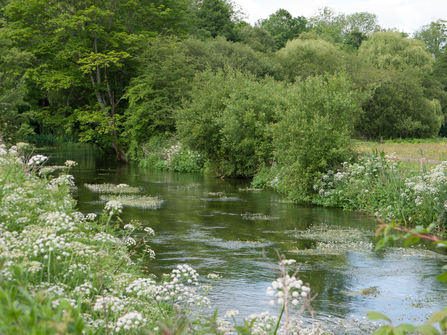
The River Exe, near Winsford. Showing river correctly fenced to stop cattle from polluting the river, or eroding the river banks. A healthy example of river habitat. Photo by Ross Hoddinott.
Water
Water and wetlands are a vital part of our natural world – the lives of animals, plants and people depend on them for their survival. However, freshwater habitats like wetlands, rivers and ponds have been lost, modified and polluted - and the species that depend on them are in decline. Across the UK Wildlife Trusts are working across river catchments in partnership with landowners, government agencies, water companies, and other NGOs to improve our freshwater environment for wildlife and people.
Over 10% of our freshwater and wetland species are threatened with extinction in the UK, and we’ve lost 90% of the wetland habitats our landscape once supported.
Why are freshwater habitats important?
Over 10% of our freshwater and wetland species are threatened with extinction in the UK, and we’ve lost 90% of the wetland habitats our landscapes once supported.
The reasons for this dramatic loss include unsustainable farming and development practices, urbanisation and abstraction. Species are affected by pollution from rural and urban areas, the modification of rivers and wetlands (like replacing natural riverbanks with concrete sides) and the impacts of invasive non-native species, which predate, outcompete and pass disease to our native wetland wildlife.
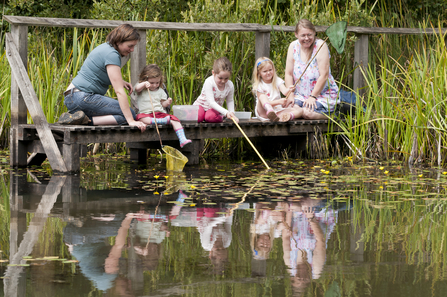
Thousands of species like otters, kingfishers, salmon, dippers, dragonflies, water voles and herons rely on safe wetland habitat. Our freshwaters are vital for society too. Rivers, and the aquifers that feed them, are the source of our water supplies, providing drinking water to homes and businesses, and water for industry and farming. Healthy wetlands and rivers are essential to sustaining these supplies. They can save us money by naturally filtering the impurities from our water, reducing the amount of energy and chemicals that water companies need to use to treat our drinking water. They can also provide communities with protection from flooding by holding water in the landscape and slowing the flow of water through river systems, preventing it rushing into our towns and villages. And evidence shows that spending time near water improves our happiness and health.
Ross Hoddinott/2020VISION
(C) Rob Jordan/2020VISION
Tom Marshall
What do The Wildlife Trusts do?
- Manage, advise on, and support partners to restore thousands of kilometres of watercourses.
- Work with natural processes to restore habitats and to hold water in the landscape.
- Reintroduce wetland species like water voles and beavers.
- Engage with decision-makers to champion the needs of freshwaters, wetlands, and the wildlife they support.
We have a long history of delivering exciting freshwater and wetlands projects and working closely with partners and empowering communities. The Wildlife Trusts want to see wildlife-rich places that hold water being widespread. Restoring natural processes is a key part of this.

Terry Whittaker/2020VISION

Photo credit: Berks, Bucks and Oxon Wildlife Trust
Natural flood management
Read about our work to help reduce flooding by managing natural habitats, both upstream and in the floodplain.
Natural Flood Management
Storms and flooding cause significant damage across the UK, and climate change is likely to increase the frequency of extreme weather, costing governments and taxpayers millions and devastating communities and businesses. The Wildlife Trusts believe that government should invest in wilder landscapes with upland bogs and moors, woodlands, wetlands and species-rich grasslands acting as giant sponges, absorbing and holding water and slowing down water run-off into rivers. These habitats can provide the natural solutions to help prevent flooding in future.
Improving water quality
We want to see healthy rivers, clean beaches and coastal waters, safe drinking water, and thriving wildlife.
But presently, only 14% of England’s waters are considered to be in ‘good ecological status’ and all are polluted with chemicals. Similar figures are seen across other parts of the UK and across Europe. We believe that to drive improvements, our freshwater environment should be managed as whole systems, from watershed to the sea.
Pollution continues to be the biggest problem facing the freshwater environment, with farming and water companies the most significant contributors. Sewage spills from ‘storm overflows’, treated wastewater, livestock manure, soil erosion, fertiliser applications and pesticide use can all contribute harmful nutrients, chemicals or sediment into our waters. Soil loss is not only harmful but expensive; research by Cranfield University shows soil degradation costing the UK an estimated £1.2bn per year. Meanwhile nutrient pollution from farming and wastewater means there is no environmental ‘headroom’ to allow new homes to be built in 27 river catchment areas across England, because pollution limits are already exceeded.
As well as the financial costs of pollution, our wildlife is at risk from poor water quality as fish spawning grounds are lost to silt building up and feeding becomes harder as visibility is reduced. Too many nutrients in river systems can feed the growth of over-zealous algae and some aquatic plants, which leads to streams and rivers becoming choked up with vegetation and a decrease in plant and wildlife diversity.
This is the aquatic equivalent of our road verges becoming dominated by nettles and cow parsley that thrive in a polluted environment, at the expense of hundreds of others. In our rivers and streams, delicate aquatic plants decrease in number, and the aquatic insects and fish that are adapted to feed on them decline too as a result.
Wildlife Trusts work with both farmers and water companies to advise, support and deliver projects that reduce pollution and improve habitats for wildlife.
A catchment-based approach
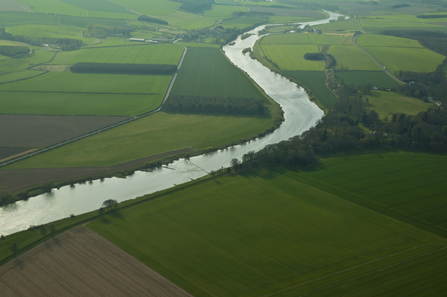
Just as a school catchment describes the area from which children feed into a particular school, a river catchment is the area defined naturally by where the rain water falls, collects and flows through the landscape, forming tributaries, streams and rivers. The boundary of a catchment is formed by high points in the landscape - the 'watershed' - nature doesn't conform to parish boundaries or county borders!
In the past, management of the water environment has fallen to government, to private companies and to landowners, often operating in isolation. The Catchment Based Approach (CaBA) brings people together to think about each river catchment as a whole. More than 1,500 organisations are now taking this approach in over 100 river catchments, covering all of England and parts of Wales.
The Wildlife Trusts are involved in almost all of these partnerships. This means we can work with many different organisations to develop projects collaboratively, using the different strengths of the individual partners to deliver great quality projects that really make a difference to our precious water environments.
Governments in England and Wales are planning to bring in legislation that will improve our management of water by making it easier to identify and tackle the issues that matter most in each catchment. These Water Reforms will be set out in a 'Clean Water Bill' expected to become law in 2027.
Species conservation and reintroduction
There is an urgent need to restore our wetland habitats to help them to thrive, Species reintroduction are an important part of this and, working with a range of organisations, Wildlife Trusts are leading efforts to reintroduce two key wetland species - water voles and beavers.
Beavers are a keystone species, playing a unique role in creating new habitats that an abundance of species benefit from. Once widespread in mainland Britain, the wetlands that they created disappeared after UK populations were hunted to extinction for their fur, meat and scent glands. Now returning, in part due to the efforts of pioneering Wildlife Trusts, we believe that beavers can bring benefit to major river catchments across the country, helping tackle some of our most pressure water challenges including wetland loss, flooding and drought.
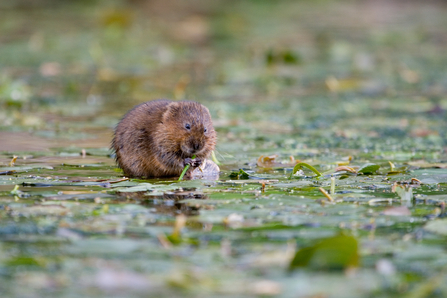
Water voles are often referred to as Britain's fastest declining mammal. Unfortunately, the future of this charming riverside creature is in peril; the water vole needs urgent help to survive in the UK. Water voles are a vital part of river ecosystems. Their burrowing, feeding and movements help to create conditions for other animals and plants to thrive - a bit like beavers do, but on a much smaller scale. The Wildlife Trusts and many other organisations are working hard to keep water voles in our rivers and streams and restore them to places where they've been lost.


