Text only | A-Z Index | Contact Us | Weblinks The Wildlife Trusts
Home | About Us | UK Wildlife | Things to Do | Membership | Events | Reserves | Wildlife Gifts | People & Wildlife
Publications | Your Local Trust | Press News | Wildlife Watch | Volunteer | Jobs | Climate Change | Legacies
press news
Welcome to The Wildlife Trusts' Press News section, here you will find the latest news stories about our work, activities and events.

Beavering away one year on

27th May, 2010

A year ago, on 29 May 2009, Scotland’s first wild beavers for over 400 years were released into Knapdale Forest, Mid-Argyll. This marked the start of the Scottish Beaver Trial, a five-year time-limited trial reintroduction and a partnership project between the Scottish Wildlife Trust (SWT), the Royal Zoological Society of Scotland (RZSS) and host Forestry Commission Scotland (FCS).

This week marks the first year milestone for the project, which aims to follow the beavers’ activities in the wild and gather information on how the presence of beavers might affect the Scottish environment and determine if the beaver might prosper again as a native species returned to Scotland’s countryside.

Reflecting on the events of the first year, Simon Jones, Scottish Wildlife Trust’s Project Manager for the Trial, said: “After spending their first full year in Scotland, we’ve seen many positive signs to indicate that our new beaver neighbours are already behaving very naturally.

“We released three beaver families last May and it’s especially thrilling to see most of them now thriving. Behaving exactly as beavers should, two families have now built their own lodges. One family has also built a dam which has created a large beaver pond and allows them to access habitat rich in food supplies. Signs of their nightly trips to forage through the undergrowth near the water’s edge, such as coppiced trees and stripped bark, can be clearly seen close to the beavers’ release lochs.

“Over 25 other European countries have already reintroduced beavers and, from their experience, we know that some animals can disperse after release and fail to settle. Unfortunately this has been the case with one of our beaver families; however it is very positive that the majority of our original beavers have settled in well.

“The license granted by the Scottish Government allows us to release up to four beaver families to create a viable breeding population and the most natural conditions possible to inform our Trial. Having already released three families, we released a fourth pair of beavers earlier this month. Early signs indicate that this pair is settling in well.”

Allan Bantick, Chair of the Scottish Beaver Trial, said: “By building lodges and dams, foraging in the undergrowth and coppicing trees near the water’s edge; these beavers are fulfilling their role as a keystone species within Scotland’s wetland habitats. They are an essential element of our native biodiversity which has been missing for too long.

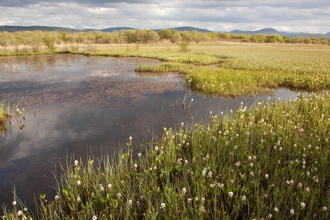
“I am encouraged by the signs of success we can already see emerging from the Trial. As coppiced trees regenerate their new shoots, gaps in an otherwise dense canopy allow extra light to penetrate the forest floor and benefit other wild plants; Knapdale is becoming an even more diverse environment for wildlife. Butterflies, dragonflies, insects, frogs, toads and ducks are already colonizing the new beaver pond, which is a delight for many visitors to see.”

Roisin Campbell Palmer, RZSS’s Beaver Project Leader, said: “The impact that these beavers are having on the landscape is entirely natural and part of their role as ecosystem engineers. Beavers are nature’s woodland managers and we are really seeing what they can do in terms of changing the landscape and creating more wetland areas.

“Last year, our project made conservation history marking the first-ever formal reintroduction of a native mammal into the wild in the UK and the Trial has created a huge amount of public interest. It is a real example of pioneering conservation project that could have lasting impact on Scotland wildlife and landscapes.

“We look forward to seeing what Scottish Natural Heritage, which is co-ordinating the Trial’s independent scientific monitoring, will report in their findings to the Scottish Government in 2014. The results of the trial, along with other sources of information, will help Scottish Ministers decide whether Scotland’s future includes wild beavers.”

The Barnluasgan Information Centre is a great starting point for a visit to the trial area. Visitors can find out more about the trial here and take a fifteen minute walk to spot signs of beavers’ presence and activity.

Story by Scottish Beaver Trial

More Information

Image credit: Philip Precey

Editor's Notes

To view editor's notes you must be logged in as a member of the press. Click here to log in or click here to register.


< back

Latest News

Sep 10

There are no relevant news stories for this month.

Aug 10

The Wildlife Trusts welcome new UK Marine Protected Areas
Chancellor visits Cheshire nature reserve to see conservation work in action
Don’t ‘wing’ it at Birdfair – flock to see The Wildlife Trusts!
From breast stroke to brush strokes for marine wildlife
Spotted: newborn beavers for the Scottish Beaver Trial
Funding plea to restore landfill to Country Park
Global goodbyes for ‘Lady’ – the UK’s most famed osprey

Jul 10

Look what’s living in our seas!
New era for restoring the natural environment
If you go down to the bog today...
Listen up! Children to tune in to the sounds of nature
Wildlife Trust urges Ministers to revise TB eradication strategy in light of appeal judgment
Pioneering podcast offers bus users wildlife insights
Wading birds find west Dorset haven
Endangered thresher shark sighted
Grass, glorious grass!
Buttercup delights botanists

Jun 10

Cumbria hosts UK's first reintroduction of white-faced darter dragonfly
First flight for protected peregrine chicks
The Wildlife Trusts welcome planning announcement
Nature writing competition launches
Survival hopes for UK’s most famed osprey
Pint-sized butterfly beats extinction in Hertfordshire
Escape to the County
Fears mount for survival of UK’s most famed osprey
Carwardine to become vice president for Avon WT
A brighter future for Berkshire's rare pale dog-violets
Records of violet carpenter bee in Worcestershire needed
A great ‘spore’ for England!
Wildlife Trust gets grant for green talent
Defra Secretary of State visits Wildlife Trust event
Wildlife festival to take over Plymouth city centre
Wild events with Sheffield Wildlife Trust
Big Biodiversity Watch
Springwatch Festival at Stanmer Park
Volunteers help give otters a home
Opening up the underwater landscape
Osprey chicks hatch at Rutland Water
Blink and you’ll miss it…
Globe-trotting birds fly onto the net

May 10

Be part of a BioBlitz!
Beavering away one year on
Rediscover your wild side
It’s Time To Save Salford’s Rainforests!
Handy new guides for nature lovers
Signs of change
Take your shot!
Coalition government urged to have higher ambition for nature
Slippery and secretive species is ‘catch’ of the day
Scotland's first wild beaver population gets a boost, as Trial's fourth family is released
Hung parliament is historic opportunity for climate

Apr 10

Natural election
Lift your spirits with nightingale song
Get up with the larks
Good things come to those who wait…
Turn detective and learn about wildflowers
Green groups assess parties’ manifestos
New stamps highlight plight of UK’s mammals
The Wildlife Trusts call for White Paper on Nature
Terms & Conditions  |  Privacy Policy
Back to top Print Page Email to a friend
Protecting Wildlife for the Future
Back to top Print Page Email to a friend
Royal Society of Wildlife Trusts Registered Charity Number 207238
© 2010 The Wildlife Trusts  |  Website Design Quiet Storm Solutions Ltd