Nature needs to be at the heart of flood prevention
18th November, 2009
Although the Floods and Water Management Bill featured in today’s Queen’s Speech (Wednesday 18 November) – The Wildlife Trusts are urging Government to allocate sufficient resources and work with nature in its flood prevention and control policies.
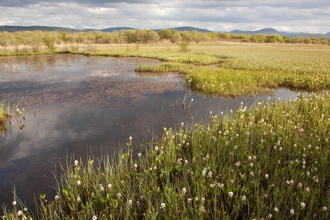
Flood defence walls continue to be a vital way of protecting homes and farmland. But, if the UK is to address the future effects of climate change, natural solutions to flood management must play a significant role. Creating wetlands and using sustainable drainage systems (SuDS) reduce the risk of flooding by enabling land to hold back water at peak flood times and storing excess water.
New approaches to flood management are needed. The Wildlife Trusts’ report, Nature’s place for Water, examines how working with nature provides sustainable solutions to flood management, reflecting on 2007’s summer floods.
Working with nature - rather than against it - can bring benefits such as improved water quality for people and a more varied range of wildlife species. Reedbeds act as water filters. They improve water quality and provide the perfect habitat for species such as dragonflies, bittern and avocet. It also makes economic sense – using catchment-wide storage in conjunction with hard defences could save £30 billion by 2080**.
Stephanie Hilborne, chief executive for The Wildlife Trusts, said: “Government must allocate sufficient resources to deliver natural solutions. The Wildlife Trusts are already restoring our damaged landscape and this involves protecting ourselves from future flooding. Wetlands are valuable for wildlife but they have added value too. They store floodwater, provide recreation and tourism opportunities, improve water quality and can act as the focus of raising awareness of flooding issues in local communities.”
Potteric Carr, Yorkshire Wildlife Trust’s flagship nature reserve, is a flood storage area. In 2007, it stored 200,000 cubic metres of water on the site, just two miles from the centre of Doncaster. It is also home to hundreds of species - including the rare avocet, 15,000 golden plover and swarms of black-darter dragonflies - attracting thousands of visitors each year. The special design of the reserve means during the floods, wildlife was able to take refuge from the floodwaters.
Stephanie added: “We know the approach taken at places like Potteric Carr works. What we need to do is put this approach into action on a much wider scale, bigger than has been done before. We need to work in partnership in local communities. We need to plan flood management schemes to make the most of local knowledge and, at the same time, raise awareness about the benefits of natural flood management projects.”
Nature’s Place for Water showcases working examples of how The Wildlife Trusts are working in partnership with landowners to restore the landscape and slow down water in the uplands; recreate wetland areas and reconnect rivers with natural floodplains in lowland areas to help store flood water. Trusts are working in urban areas to create more green spaces which also absorb flood water. Better management of natural processes will also provide vital habitat for some of the UK’s most threatened species, as well as providing wildlife-rich open spaces for communities to enjoy.
• Nature’s Place for Water is on The Wildlife Trusts’ website: http://www.wildlifetrusts.org/files/uploaded/Flooding%20web.pdf
More Information
For further information please contact Anna Guthrie, media & PR manager on 01636 670075 / 07887 754659 email: aguthrie@wildlifetrusts.org
Editor's Notes
To view editor's notes you must be logged in as a member of the press. Click here to log in or click here to register.
< back
|