PEATLANDS The Peatlands Campaign
The Wildlife Trusts’ vision for peatlands: By 2010, The Wildlife Trusts wish to see all priority peatlands in the UK in positive conservation management and 90% of the UK market for peat products to be replaced by peat-free alternatives.
Background The Wildlife Trusts have been involved in campaigning for peatland conservation since 1990 and have managed peatland sites on a practical basis for much longer.
Fourteen local Wildlife Trusts have lowland raised bog in their areas ranging from Scotland to Somerset. Northumberland and Scottish Wildlife Trust manage considerable areas of blanket bog. Many of The Wildlife Trusts members are also keen gardeners.
Consequently TWT continue to identify peatlands as habitats on which they will focus attention at the UK and local level.
In particular the Trusts are making a significant contribution to the implementation of the Biodiversity Action Plans for peatlands and are lead partner for two species that occur on bogs: the mire pill beetle and black bog ant.
The Habitat Action Plan target for peatlands to ensure that 40% of the total market for soil improver and growing media to be peat free by 2005 has been met, and we are now working towards the second target for having 90% peat free by 2010.
The Peatlands Campaign unites the country's leading voluntary bodies concerned with conservation, archaeology and geology.
Peatland campaign aims:
1. To develop and implement better peatland management to help deliver action plans for peatland habitats and BAP species
2. To prevent commercial peat extraction and unsustainable development on peatland habitats
3. To raise the awareness of the importance of peatland conservation
Actions:
All appropriate Wildlife Trusts are working to bring peatland reserves and peatland Wildlife sites (non-statutory) into positive conservation management by 2015.
All appropriate Wildlife Trusts are working to increase the amount of peatland habitats that are statutorily designated/reduce the amount of peatlands with damaging planning consent
The Wildlife Trusts collectively will raise awareness and understanding of the need to protect peatland habitats. We will do this by working with the retail sector, professional horticulture sector and the general public
What is Peat and why is it so important?
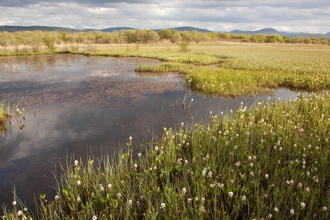
Peat grows naturally in a living bog. Plants living on the surface such as sphagnum mosses, bog cotton and heathers don't rot when they die because the ground is waterlogged. They form peat.
The UK's lowland raised bogs are home to many important species of birds, thousands of rare insects and a wealth of unusual plants. But only a fragment of near-natural bog remains, with over 94% having been damaged or destroyed.
Your choice...
Gardeners are the most significant sector in terms of peat use and account for around 70% of total horticultural peat use. Over 60% of the peat we use is imported from outside of the UK, mainly from the Republic of Ireland. Together with other uses of peat, this is a major threat to our remaining peat bogs, and those in the rest of Europe.
Despite this, it has never been easier to go peat-free. A wide range of peat-free composts are on sale in garden centres and DIY stores for use as mulch, soil improvers and growing media. More and more container plants are being sold in peat-free composts.
Our guide 'WHERE TO BUY PEAT-FREE 2008' tells you which peat-free products can be found in the major national chain stores, and how you can make a difference for peatland conservation. Our fascinating peat bogs, their wildlife and historical records can be saved by gardeners choosing wisely.
Why not make your own compost? Download the ‘Making Compost’ leaflet from Northumberland Wildlife Trust.
|